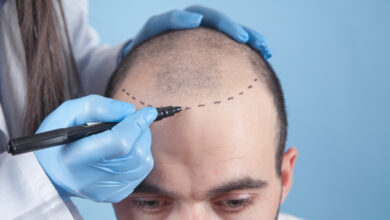
Beard Transplant in 2020: Historical Guide

Beard density varies with genetics, hormones, scarring and other medical factors. Beard transplantation can be considered when facial-hair density is limited and suitable donor hair is available.
Scarcity or openness in your beards is not a precursor to any health problem. However, in men who give importance to the beard aesthetically, beard shedding may cause self-confidence problems, and may cause important psychological consequences such as depression. The first method applied by men who experience shedding in their beards is cures prepared with natural plants at home.
However, even though regular beard care is made, it is not possible to bring back your beard, which has already been poured into the openness with the methods you have applied at home. Nowadays, you can regain your beards that have been shed by the application of beard transplant in hair transplant centers.

What Techniques Are Used for Beard Transplantation?
FUT and FUE are different donor-harvesting approaches. For beard transplantation, the appropriate technique depends on donor characteristics, scar tolerance, graft requirements and the treatment plan.
The FUT method, in other words, the grafts sown in the hair transplant operation, are everywhere at the same angle. For this reason, both the post-operative traces can remain and the desired natural result cannot be reached.
With FUE, individual follicular units are harvested rather than removing a strip of scalp. It avoids a linear strip scar, but small extraction scars can still occur. Natural appearance depends heavily on graft direction, angle, density and recipient-site design.
How Is Beard Transplantation Performed?
When the beard is cultivated, high quality hair roots are taken from any part of the body as in the same hair transplant and transplanted to the region of your beard. The important point during the process is the removal of hair follicles from the beard area as much as possible. Especially the neck part is considered to be the most ideal donor area because it has the best quality grafts for transplantation. In addition, the most natural appearance will be obtained by planting the graft taken from the beard area to the designated area. In cases where there are not sufficient quality hair follicles in the beard area, the donor area can be defined as a nape.
Graft selection should match the intended beard pattern. Single-hair follicular units are often useful for borders and finer transitions, while graft handling and time outside the body should be managed carefully to protect follicle viability.
During beard transplantation, graft direction and angle should follow the natural facial-hair pattern as closely as possible. These design choices strongly influence whether the result looks natural.
There is no pitting in the hair follicles after sowing as no cutting tools are used during the procedure.
How Many Grafts May Be Needed?
You have to consider your facial structure when making a beard plantation. After deciding on the area where you want to make a beard, you should consult with a specialist. First of all, necessary examinations and analyzes are made and it is decided whether you are suitable for beard planting. Factors such as hereditary factors, the direction and angle of hair removal, the quality of the hair follicles, and the pigments that determine the color of the hair are important for correcting the beard. For this reason, the intensity of the beard sowing and the determination of the correct sowing area is decided according to your doctor’s analysis.

Who May Be a Candidate?
Beard planting; anyone who lives in the beard shedding, dilution and clarity due to hereditary factors, various psychological disorders and diseases, drug use, accidents and environmental factors. If you have a scar, burn, or beard problem in your beard area, you can easily make a beard plantation. In addition, if you have never had a beard (corner), you can successfully make a beard plantation in hospitals and hair transplant centers that use state-of-the-art devices.
Aftercare After Beard Transplantation
After sowing, you should not wash the beard area for the time specified by your doctor. Also, you should not use products such as shaving lotion, cologne, perfume in the planting area. You should not cut your beards during the healing period. Your doctor will give you the necessary information after sowing and will tell you the date you can shave.
Will There Be Scarring?
Redness, traces of blood and scabs after the beard transplant are extremely normal. These reactions are extremely normal and temporary.
Thanks to the latest technology devices and FUE technique which is the most current planting method, there is no trace after the process.
When Does Transplanted Beard Hair Grow?
In the first 15 days after beard transplantation, spills will occur in your beard. You should know that the spilled beard is not just a thought, but the spilled hairs are just broken bristles. At least 4 months to begin to become apparent hair roots. At the end of the 8th month, approximately 60-70% of the hair follicles sown. At the end of 1 year your hair follicles are out and your beard is prolonged.
Can Beard Transplantation Change Beard Shape?
The operation of the beard is not just an operation to fill the areas where the opening and dilution appear as a result of shedding. At the same time, scattered and occasionally seen in the region where the planting can be done. In this way, hair roots that cause an aesthetically dispersed appearance are taken and the gaps are sown.
Historical Beard Transplant Pricing
Beard transplant prices are determined by the number of grafts to be transplanted to the area to be sown. You can determine the number of grafts together with your doctor. In addition, depending on the size of the area to be sown and the quality of the grafts taken, the number of hair follicles is one of the factors determining the price of beard sowing.
Frequently Asked Questions About Beard Transplantation
1) Where Are Donor Follicles Taken From?
In hair transplantation, the hair follicles are usually used in the neck area. In addition, hair follicles can be removed from the chest, arms and legs.
2) Can Beard Transplantation Be Used for Burn Scars?
It is not possible to destroy the burn mark, but can be camouflaged with beard transplantation.
3) Does the Beard Need to Be Shaved?
Cultivated beards are identical to natural beards, can be shaved.
4) How Long Does the Procedure Take?
The duration of beard transplant varies according to the width of the area where the beard is to be planted. An average beard transplant lasts about 5 hours.
5) How Many Grafts Can Be Used?
The root density to be cultivated varies according to the width of the region and patient demand. If the patient is completely beardless, it can be done between 1500-3000 grafts