Can Hair Grow 10 cm in 2 Weeks? What’s Realistic and What Actually Helps

Growing 10 centimeters of scalp hair in two weeks is not biologically realistic for most people.
Human scalp hair typically grows at about 1 centimeter per month, or roughly 0.3 to 0.4 millimeters per day. At that rate, two weeks of growth is usually only a few millimeters—not 10 centimeters.
That does not mean you cannot improve the way your hair looks and grows. The realistic goal is to support healthy follicles, reduce breakage, correct any nutritional deficiency and treat an underlying hair-loss condition when one is present.
How Fast Does Hair Actually Grow?
Scalp hair grows in cycles. During the active growth phase, called anagen, the follicle produces a growing hair shaft.
Clinical references commonly describe average scalp-hair growth as about 1 cm per month. Individual variation exists, but a claim of 10 cm in 14 days would require hair to grow many times faster than normal human scalp hair.
So if a product, shampoo, oil or home remedy promises 10 cm of new hair in two weeks, that claim should be treated skeptically.
Why Hair Can Seem to “Grow Faster” Without Actually Growing Faster
Sometimes people report dramatic improvement after a new routine because the hair looks longer, fuller or healthier—not because the follicle suddenly changed its biological growth rate.
This can happen when:
- less hair breaks off at the ends
- frizz is reduced
- the hair shaft is smoother and easier to detangle
- dry, damaged ends are trimmed
- shedding decreases
- the scalp is less inflamed or irritated
Reducing breakage can help you retain more length over time, but it is different from making the follicle produce several centimeters of new hair in a few days.
Does Cutting Hair Make It Grow Faster?
No. Trimming can make hair look healthier because it removes split and damaged ends, but hair growth occurs inside the follicle beneath the skin.
Cutting the visible hair shaft does not change the growth rate at the root.
Does Beer Make Hair Grow Faster?
The previous version of this article promoted washing hair with beer as a way to grow 10 cm in two weeks. There is no reliable clinical evidence that beer can accelerate scalp-hair growth to anything close to that rate.
Beer contains water, carbohydrates and small amounts of other compounds, but applying it to the scalp has not been shown to override the normal human hair-growth cycle.
It may temporarily change the feel of the hair shaft, but that should not be confused with proven hair regrowth.
What Actually Supports Healthy Hair Growth?
There is no miracle method that safely multiplies normal hair growth, but several habits can help preserve healthy growth and reduce unnecessary breakage.
1. Eat Enough Protein and Calories
Hair follicles are metabolically active. Severe calorie restriction, rapid weight loss and low protein intake can trigger increased shedding.
A balanced diet that provides adequate protein, iron, zinc and other essential nutrients supports normal follicle function.
2. Correct Deficiencies Instead of Guessing
Iron deficiency, low vitamin D, zinc deficiency and other nutritional problems can contribute to hair shedding in some people.
Supplements are most useful when there is an actual deficiency. Taking high doses “just in case” is not necessarily helpful and can sometimes be harmful.
For more detail, see our Hair Vitamins for Hair Loss guide.
3. Reduce Heat and Chemical Damage
Frequent bleaching, chemical straightening, high-heat styling and aggressive brushing can damage the hair shaft.
This does not usually slow the follicle itself, but it can cause enough breakage that the hair appears unable to grow longer.
Using lower heat, conditioning regularly and handling wet hair gently can help retain length.
4. Avoid Tight Hairstyles
Tight braids, ponytails, extensions and other styles that repeatedly pull on the scalp can cause traction alopecia.
Early traction-related hair loss may improve when the tension stops. Long-standing traction can become permanent if follicles are scarred.
5. Treat Dandruff or Scalp Disease Properly
An itchy or inflamed scalp can increase scratching and breakage, but dandruff itself does not mean the follicles need a “growth shampoo.”
Persistent scaling, redness, pain or itching should be treated according to the underlying condition rather than with random home remedies.
Can Shampoo Make Hair Grow Faster?
Most shampoos primarily clean the scalp and hair. A shampoo can improve scalp comfort, remove excess oil and help manage conditions such as dandruff, but it generally does not make healthy follicles suddenly grow several times faster.
Some medicated shampoos are useful for specific scalp disorders, but their purpose is treatment of that condition—not creating 10 cm of new growth in two weeks.
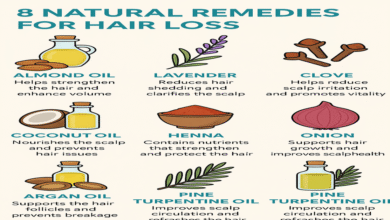
What About Rosemary Oil, Peppermint Oil and Other Natural Remedies?
Some plant-based products have early research behind them, but the evidence varies greatly.
Rosemary oil, for example, has limited human data suggesting possible benefit in androgenetic alopecia. That is very different from proving that it can accelerate normal hair length by several centimeters in a short period.
For a full evidence review, see Plants for Female Hair Loss: What the Evidence Shows.
What About Minoxidil?
Minoxidil is an evidence-based treatment for certain forms of pattern hair loss. It can help some people maintain or regrow hair over time, but it does not create instant length.
Results are usually evaluated over months, not days or weeks.
Early increased shedding can occur in some users, and treatment needs to be used consistently to maintain benefit.
What About PRP?
Platelet-rich plasma (PRP) has been studied for androgenetic alopecia and may improve hair density in selected patients.
Again, the goal is to improve hair growth over time—not to produce 10 cm of new hair in two weeks.
See our PRP for Hair Loss guide for more detail.
Why Hair May Suddenly Stop Seeming to Grow
If your hair used to retain length but suddenly seems to stop growing, the issue may not be the growth rate itself.
Possible reasons include:
- increased breakage
- telogen effluvium after illness, stress or surgery
- iron deficiency
- thyroid disease
- rapid weight loss
- pattern hair loss
- scalp inflammation
- chemical or heat damage
If shedding is persistent or density is visibly decreasing, identifying the cause is more useful than trying to “speed up” normal growth.
How Long Does It Take to Grow 10 cm of Hair?
At an average rate of about 1 cm per month, growing 10 cm of new scalp hair may take roughly 9 to 12 months for many people.
Some people grow slightly faster and others more slowly, but the difference is measured in months—not in a jump from two weeks to 10 centimeters.
Can Genetics Affect Hair Growth Rate?
Yes. Hair characteristics vary from person to person.
Factors that can influence visible hair growth include:
- genetics
- age
- hormones
- nutritional status
- overall health
- hair type
- the length of the anagen phase
These differences can explain why one person appears to grow long hair more easily than another.
How to Measure Hair Growth Properly
If you want to know whether your hair is growing normally, do not judge it day by day.
A more useful method is:
- Choose a small section of hair near the same scalp area.
- Measure from a fixed point.
- Take a photo under the same lighting.
- Repeat after four to eight weeks.
- Track shedding and breakage separately.
This gives a much more realistic picture than comparing hair every few days.
When Should You See a Dermatologist?
Consider professional evaluation if you notice:
- sudden or heavy shedding
- patchy bald areas
- a widening part
- receding temples
- scalp pain, burning or scaling
- eyebrow loss
- visible scarring
- hair loss after a new medication
A dermatologist can determine whether the issue is normal shedding, breakage, pattern hair loss or another medical condition.
Bottom Line
No scientifically credible method can make normal scalp hair grow 10 cm in two weeks.
Healthy scalp hair grows at about 1 cm per month on average. The best way to “grow hair faster” is therefore not to chase extreme claims, but to protect the hair you already have, correct deficiencies, reduce breakage and treat any underlying hair-loss condition.
If your concern is thinning rather than length, start with our broader guide: What Helps with Hair Loss?.