
Afro Hair Transplant in Turkey: Techniques, Results, Cost & What to Know
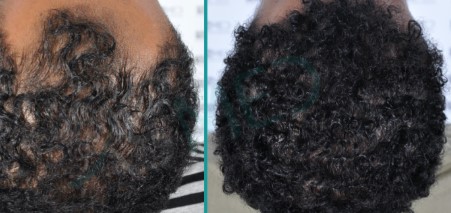
Afro Hair Transplant in Turkey: Techniques, Results, Cost & What to Know
Hair transplantation for Afro-textured, tightly curled or highly curly hair requires a different level of planning and technical experience compared with straight or mildly wavy hair.
The visible curl of Afro-textured hair is only part of the challenge. In many patients, the hair follicle beneath the skin may also follow a curved path. This can make graft extraction more technically demanding and may increase the risk of damaging follicles if the surgeon or medical team is not experienced with this hair type.
Turkey has become a major destination for hair transplantation, but patients with Afro-textured hair should pay particular attention to the clinic’s experience with curly follicles rather than choosing a provider based only on price or graft numbers.
Why Afro Hair Transplants Are Different
Afro-textured hair often has several characteristics that affect transplant planning:
- Curved or C-shaped follicles beneath the scalp
- Greater risk of follicle transection during extraction
- Different donor-area density patterns
- Tighter curl patterns that can create strong visual coverage
- Different hairline design requirements
- Increased importance of careful graft handling
Because curled hair can provide more visual volume than straight hair, an effective result does not always require the same graft density used for other hair types.
However, successful extraction can be technically more difficult.
Can FUE Be Used for Afro Hair?
Yes.
FUE, or Follicular Unit Extraction, can be used successfully for Afro-textured hair, but the extraction technique may need to be adapted.
The main challenge is that the direction of the follicle underneath the skin may not perfectly match the visible direction of the hair above the scalp.
An experienced team may adjust factors such as:
- punch size
- punch angle
- extraction depth
- rotational technique
- donor-area mapping
The goal is to remove the follicular unit without damaging the curved follicle.
For this reason, patients should ask clinics specifically how many Afro-textured or tightly curled hair cases they have performed.
Is DHI Suitable for Afro Hair?
DHI may also be used for Afro-textured hair.
It is important to understand, however, that DHI primarily describes the implantation stage rather than a completely separate graft-harvesting method.
In many DHI procedures, follicles are still harvested using FUE and then implanted with an implanter pen.
Therefore, the most technically difficult part in Afro hair transplantation may still be graft extraction.
The decision between conventional FUE implantation and DHI should depend on the patient’s donor area, hair-loss pattern, graft requirements and the clinic’s experience.
Why Surgeon Experience Matters
Experience with Afro-textured hair is particularly important because improper extraction may damage grafts before they are implanted.
When comparing clinics, patients should ask to see:
- before-and-after photos of Afro hair patients
- donor-area photos
- cases photographed at 6–12 months
- examples with similar curl patterns
- information about who performs the extraction
- details about surgeon involvement
Generic hair transplant experience does not necessarily mean extensive experience with tightly curled follicles.
Hairline Design for Afro-Textured Hair
Hairline design should take into account the patient’s natural facial proportions, age, previous hairline and curl pattern.
An overly straight or excessively low hairline can appear unnatural.
For many patients, a slightly irregular and conservative hairline produces a more realistic appearance.
Hair direction and angle are also critical because curly hair behaves differently as it grows.
Donor Area Assessment
The donor area is usually located at the back and sides of the scalp.
Before surgery, the clinic should evaluate:
- donor density
- follicle quality
- degree of curl
- scalp characteristics
- expected number of usable grafts
- risk of overharvesting
Patients should be cautious of clinics promising extremely high graft numbers without a detailed donor-area assessment.
Preserving the donor area is important because donor follicles are limited.
How Many Grafts Are Needed?
The number of grafts varies significantly between patients.
It depends on:
- size of the balding area
- donor density
- hair thickness
- curl pattern
- desired hairline
- previous procedures
- degree of hair loss
Curly hair may sometimes provide strong visual coverage because each hair occupies more visible space.
That does not mean every patient needs fewer grafts, but graft planning should be individualized.
Afro Hair Transplant Results
Hair transplant growth is gradual.
A typical timeline may include:
First Few Weeks
Transplanted hairs may shed after surgery. This is commonly part of the normal post-transplant process.
3–4 Months
Early new growth may begin.
6 Months
A noticeable improvement may become visible, although density is usually still developing.
9–12 Months
The result becomes much easier to evaluate.
12–18 Months
Some patients may continue to see maturation and improvement in texture and density.
Individual timelines vary.
Will the Transplanted Hair Stay Curly?
In most cases, transplanted follicles retain the characteristics of the donor hair.
Therefore, Afro-textured donor follicles generally continue producing curly or tightly curled hair after transplantation.
The appearance may change slightly during early regrowth, but the transplanted hair usually reflects the characteristics of the original donor follicles.
Afro Hair Transplant Cost in Turkey
Hair transplant prices in Turkey vary significantly between clinics.
Factors affecting price may include:
- surgeon involvement
- number of grafts
- clinic reputation
- procedure type
- medical team experience
- accommodation and transfer packages
- complexity of the case
Afro hair transplantation should not be selected purely on price.
Because extraction may be more technically demanding, experience with curly follicles can be more important than finding the lowest-cost package.
Potential Risks
Possible risks are similar to other hair transplant procedures and may include:
- swelling
- redness
- temporary numbness
- folliculitis
- infection
- uneven growth
- scarring
- poor density
- donor-area overharvesting
- graft damage
For tightly curled follicles, graft transection during extraction is an especially important technical consideration.
What Is Graft Transection?
Transection occurs when the follicle is accidentally cut or damaged during extraction.
Because Afro-textured follicles may curve beneath the skin, the follicle’s true path can be more difficult to predict.
A clinic experienced with these follicle shapes may be better equipped to adjust its extraction technique accordingly.
Patients can ask clinics whether they monitor transection rates during surgery.
Afro Hair Transplant Before and After Photos
Before-and-after photos can help evaluate a clinic, but they should be reviewed carefully.
Look for:
- consistent lighting
- similar camera angles
- donor-area photographs
- clear timelines
- results at 9–12 months or later
- patients with similar curl patterns
- close-up photographs of the hairline
Immediate post-operative photographs alone do not demonstrate the final result.
How to Choose a Clinic in Turkey
Before selecting a clinic, consider asking:
- How many Afro-textured hair transplant cases have you performed?
- Who performs the graft extraction?
- Is the surgeon directly involved?
- Can I see complete before-and-after cases?
- How do you adapt FUE extraction for curved follicles?
- What graft number do you recommend and why?
- How do you avoid donor-area overharvesting?
- What happens if graft extraction proves more difficult than expected?
- How are complications managed?
- What follow-up support is available after I return home?
Red Flags to Watch For
Be cautious if a clinic:
- guarantees a specific result
- promises unusually high graft numbers without examination
- cannot show Afro hair cases
- avoids explaining who performs the surgery
- focuses almost entirely on hotel and transfer packages
- gives identical graft recommendations to every patient
- pressures you to pay immediately
A hair transplant is a medical procedure, not simply a cosmetic package.
Afro Hair Transplant in Turkey vs Other Countries
Turkey is often chosen because of its large number of hair transplant clinics and comparatively competitive pricing.
However, patients should compare clinics rather than countries.
A highly experienced clinic with documented Afro hair cases may be preferable to a cheaper clinic with little experience in tightly curled follicles.
Frequently Asked Questions
Can Afro hair be transplanted successfully?
Yes. Afro-textured hair can be transplanted successfully, but curly follicles can make extraction technically more demanding.
Is FUE suitable for Afro hair?
Yes, although the extraction method may need to be adapted to the curvature of the follicles.
Is DHI better for Afro hair?
Not necessarily. DHI mainly relates to implantation. The quality of graft extraction and the experience of the medical team remain especially important.
Does Afro hair need more grafts?
Not always. Because curly hair can create strong visual coverage, graft requirements depend on the individual patient.
Will transplanted Afro hair remain curly?
Generally, transplanted follicles retain the characteristics of the donor hair.
How long does it take to see results?
Initial growth may begin within several months, while a more complete result is often evaluated around 9–12 months or later.
Final Thoughts
Afro hair transplantation can produce natural-looking results when the procedure is planned and performed by a team experienced with curly follicles.
The most important factor is not simply whether a clinic offers FUE or DHI. Patients should focus on the clinic’s actual experience with Afro-textured hair, donor-area management, extraction technique, surgeon involvement and documented long-term results.
A careful consultation and realistic expectations are essential before deciding on treatment.
Medical Disclaimer: This article is for general informational purposes only and does not replace medical advice, diagnosis or treatment from a qualified healthcare professional.