Finasteride and Minoxidil After a Hair Transplant: Questions to Ask

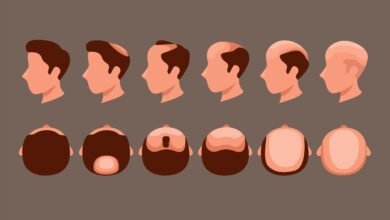
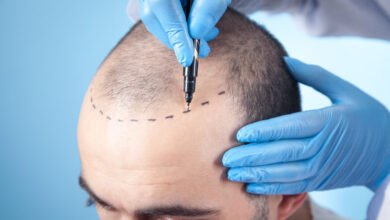
A transplant and medical treatment answer different questions. Surgery redistributes donor hair; a medication plan may address continuing loss in hair that was already present. Whether you need treatment afterwards depends on your diagnosis and the assessment of a qualified clinician.
Ask what each treatment is meant to do
Before agreeing to a package, ask which parts of the result depend on surgery, existing hair or an additional treatment. The American Academy of Dermatology notes that medicine may be recommended to help with continuing hair loss after transplantation. That does not mean every patient needs the same medicine.
Read our finasteride results guide and minoxidil overview to prepare questions. These explain research context; they do not prescribe a regimen.
Discuss suitability before the operation
Bring your medical history, current prescriptions, supplements and any previous reaction to hair-loss treatment. Ask whether the proposed medicine fits your diagnosis and whether a local prescriber can continue follow-up after you travel home.
Timing around surgery
Obtain written instructions about starting, stopping or restarting any treatment. Do not change a prescribed medicine independently and do not apply a scalp product to a surgical area without the treating team’s advice. Ask what happens if you cannot tolerate the suggested treatment.
Topical does not automatically mean risk-free
The FDA has warned about adverse-event reports involving compounded topical finasteride and states that there is no FDA-approved topical finasteride formulation in the United States. A product being applied to the scalp does not establish that systemic exposure is absent. This is a US regulatory statement, not a claim about every country’s product approvals.
Ask the prescriber about formulation, handling, potential exposure to other people and the product’s local regulatory status.
Compare progress fairly
Record the dates of surgery and medication use separately. If an archived patient started finasteride after the operation, a later photograph should not automatically be attributed to transplantation alone. Keep the same lighting and note any second session or additional treatment.
A follow-up checklist
- Who is prescribing and reviewing the treatment?
- What is the intended benefit for my native hair?
- What risks and contraindications apply to me?
- What is the plan if I stop or cannot tolerate it?
- When should the treatment response be reviewed?
- Who will advise me after I return home?
For the surgical timeline, use our recovery guide. For symptoms, contact the appropriate healthcare professional instead of treating a gallery or forum routine as medical instructions.
Practical takeaway: Separate the surgical plan from any prescription plan; the treating clinician and prescriber should coordinate decisions about medications.
Two treatment goals that should not be mixed up
A transplant plan concerns where donor follicles may be placed, while a medicine discussion may concern hair that remains outside the transplanted region. The effect of a medicine on native hair and the visual effect of surgery should therefore be documented separately. A later photograph alone cannot assign improvement to one intervention when several were started around the same time.
| Question | Information to request from the clinician |
|---|---|
| Why discuss medication? | The diagnosis and the treatment goal for remaining native hair |
| Which product and route? | The exact formulation, regulatory status and reasons for that choice |
| What about surgery timing? | Written instructions about products in the period before and after surgery |
| Who monitors safety? | The prescriber, expected follow-up and when to call about adverse effects |
| How will outcomes be assessed? | Dated photographs and notes on all treatments, rather than a single comparison |
Why topical and oral medicines need separate discussions
A topical medicine is not necessarily free from systemic effects; an oral medication can have risks unrelated to the scalp. The ISHRS minoxidil patient resource describes formulation differences and possible systemic adverse effects of oral treatment. The FDA safety communication on compounded topical finasteride describes adverse-event reports and regulatory issues in the US. These are different products and warnings and should not be conflated.
Do not copy a dose from a clinic package or a social-media diary. Discuss diagnosis, medicines, contraindications, follow-up access after travel and local prescribing rules with a qualified healthcare professional. The clinician should decide whether either medicine is appropriate for a particular person.
Medication decisions after surgery are individual
Transplanted follicles do not stop untreated pattern hair loss elsewhere. A clinician may discuss medication to help manage continuing loss, but surgery does not make a medicine necessary for everyone and medication does not guarantee a particular cosmetic result. Ask whether a treatment is intended for transplanted hair, native hair or both, when it should be started or resumed after surgery, and who will monitor benefits and adverse effects.
Do not start, stop or change a prescription based on a clinic package or an online timetable. Discuss personal medical history and reproductive considerations with a qualified prescriber. The AAD overview explains that medicines may help slow new loss, while the NHS finasteride guide lists important safety considerations. This article cannot determine whether either medicine is suitable for you.
Sources and editorial information
- FDA: risks associated with compounded topical finasteride
- American Academy of Dermatology: medicine and transplant planning
Sources checked: 13 October 2026. Read our editorial approach. This is an educational overview, not a diagnosis or a personalised postoperative or medication plan.