Unshaven Hair Transplant in Turkey: What to Clarify
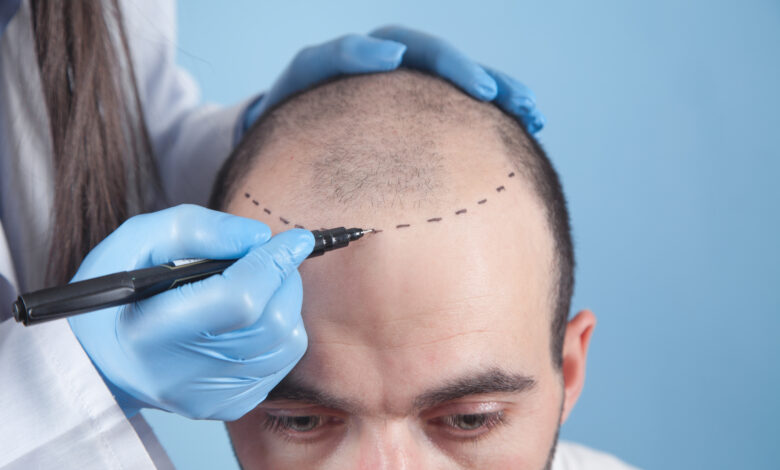
“Unshaven” can mean different things in a clinic’s offer. Before deciding, ask which parts of the donor and recipient areas will be trimmed and what your hair will actually look like after the operation.
Donor and recipient shaving are separate questions
The ISHRS distinguishes fully shaved, partially shaved and unshaven donor approaches. A partial shave may be hidden by longer surrounding hair. This does not automatically mean the recipient area is also unshaven.
Ask the clinic to show the expected shaving pattern for your plan. A marketing label alone is not enough to establish suitability or postoperative appearance.
Unshaven does not mean non-surgical
The extraction and implantation plan still needs a clinical assessment. Ask who will perform the surgical stages and why the proposed approach fits your donor area and treatment goals. Shaving preference should not replace a medical plan.
Graft count and coverage
Clarify whether the offer changes the area treated, procedure duration or planned count. Do not assume an unshaven approach can deliver every advertised number. Read our graft guide and ask how the clinic would adapt the plan after examination.
DHI and unshaven procedures
Do not treat DHI as a guarantee of an unshaven donor or recipient area. Ask the provider to describe harvesting, implantation and shaving separately. Our DHI Turkey guide focuses on the practical questions behind the terminology.
Price, recovery and appearance
Obtain a written quote stating whether the shaving preference affects cost or scheduling. Discuss the aftercare routine and what work or headwear restrictions remain. Keeping hair long does not eliminate the need to protect the operated scalp.
Questions before booking
- Which areas will be shaved or trimmed?
- Can you illustrate the postoperative appearance?
- Does the plan change coverage or the graft estimate?
- Who performs each surgical stage?
- What additional cost and aftercare requirements apply?
Compare the answer with our aftercare checklist. A less visible haircut can be a preference; it is not proof of a better result.
Practical takeaway: Get a precise explanation of donor shaving, recipient shaving and extracted hair length before accepting an “unshaven” quote.
Three different situations sold as “unshaven”
Unshaven terminology is not standardised across advertisements. The ISHRS patient explanation separately discusses donor shaving, recipient shaving and the length of the extracted hair. Confirm exactly which of these choices the clinic means, because a partially shaved donor zone hidden beneath longer hair differs from a technique that extracts long-hair grafts.
| Description | What to verify with the clinic |
|---|---|
| Fully shaved donor | Whether the recipient area is also shaved and how long the hair is trimmed |
| Partially shaved donor | Number and placement of the hidden shaved strips or sections |
| Unshaven donor | Whether long shafts are actually extracted or individual hairs are trimmed first |
| Unshaven recipient area | How existing long hairs affect implantation and postoperative instructions |
Why a photograph of the first postoperative day matters
For people who wish to remain discreet at work, the initial appearance can matter as much as the eventual result. Ask for examples that show both the back of the head and the treated region after surgery. Check the clinic’s explanation of what was shaved instead of assuming a photograph labelled DHI necessarily demonstrates a no-shave method.
Avoid treating “unshaven” as a safety or effectiveness guarantee. ISHRS describes technical trade-offs; the final decision depends on individual planning and the surgeon’s judgement. Discuss any additional cost, expected appointment time and care instructions before booking.
Clarify what “unshaven” means in the written plan
Ask whether the donor area, recipient area or both will remain unshaven. Some approaches leave surrounding hair long but trim individual extraction sites; others use long-hair grafts. These are not interchangeable promises. Unshaven FUE can be technically demanding, and the surgeon should explain how the planned method affects visibility, extraction limits, time and the ability to monitor the donor area.
Before booking, request a marked diagram showing which areas will be trimmed, who performs each step and what happens if the examination changes the plan. “No-shave” does not mean scar-free or suitable for every pattern of loss. The ISHRS terminology guide describes the variations and their trade-offs.
Sources and editorial information
Sources checked: 13 October 2026. Read our editorial approach. This is an educational overview, not a diagnosis or a personalised postoperative or medication plan.