Hair Transplant Scars: FUE, FUT and Donor Appearance
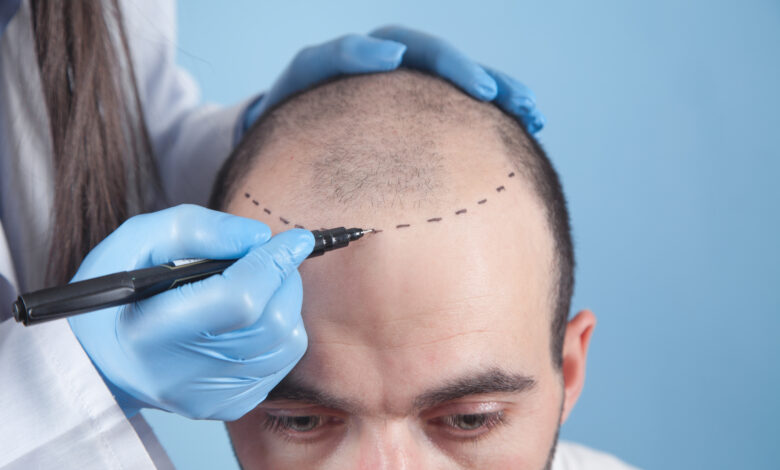
Hair transplantation involves incisions. “Scarless” should not be accepted as a substitute for an explanation of the procedure and how the donor area may look at your preferred hair length.
FUE and FUT create different donor patterns
FUE removes individual follicular units through small incisions, while strip FUT removes a section of donor scalp that is closed. Ask the surgeon to explain the expected scar pattern, trade-offs and how it relates to your hairstyle. Neither method should be advertised as a guarantee of no visible marks.
Hair length changes visibility
When comparing donor photographs, check whether the hair length is similar. A covered donor area and a closely shaved one cannot show the same degree of visibility. Lighting, angle and timing also affect the comparison.
Previous surgery matters
Bring records of earlier extraction or strip surgery to the consultation. The assessment should account for existing scars and the remaining supply, rather than treating a second operation as a fresh donor area.
Read our donor guide and repair overview if you are considering another procedure after an unsatisfactory result.
Ask for a realistic discussion
- What scar pattern is associated with this method?
- How might it appear at my usual haircut length?
- What do my previous procedures change?
- What follow-up is available if healing is concerning?
- What can and cannot be improved later?
Reading a photo archive
Missing donor photos are a limitation of documentation. They do not prove the absence of scars or demonstrate donor damage. Look for clear dated views and obtain an individual assessment for your own scalp.
Use our FUT and FUE section for related comparisons, and the photo timeline to keep before-and-after judgments fair.
If symptoms are severe or unexpected, contact the treating team promptly. Cosmetic assessment and medical wound care are different needs.
Practical takeaway: Request healed donor photographs at your usual haircut length and discuss the visible marks expected from the proposed harvesting method.
FUE and strip FUT: a scar visibility comparison
Both approaches involve surgery and healing. The key difference for a prospective patient is the pattern of donor marks and how those marks might look at their customary hair length. An online picture taken with longer hair over the donor area may not show what a much shorter haircut would reveal. Rather than asking whether a technique is “scarless”, ask the surgeon to demonstrate healed examples photographed at comparable lengths and lighting.
| Question | FUE consultation | Strip FUT consultation |
|---|---|---|
| What donor marks should I expect? | Discuss the distribution of small extraction sites. | Discuss the linear wound closure and resulting scar. |
| Will I be able to wear my preferred short haircut? | Show healed donor photos at that hair length. | Ask how scar visibility changes with hair length. |
| What if I need another operation? | Review previously harvested areas and remaining supply. | Review existing scar, donor elasticity and other constraints. |
How to judge a before-and-after scar photograph
Write down four details: procedure date, time since surgery, haircut length and whether the photograph shows the full donor area. A close-up of a small region cannot document the condition of the whole donor zone. Neither a healed photograph nor an online comment predicts your own scarring.
The ISHRS explanation of donor harvesting methods distinguishes strip FUT from FUE and reminds readers that FUE includes a surgical incision step. A clinician should explain how technique, previous procedures and individual healing affect the trade-offs.
What a scar comparison should include
Ask to see healed donor photographs that show the whole relevant area, the date after surgery and the hair length at the time of the image. FUE usually leaves multiple small extraction marks; strip FUT leaves a linear scar. Healing and visibility vary, so a photograph cannot promise how your own scalp will heal. If you have an existing scar, ask whether a surgeon considers observation, scar revision, grafting into the scar or scalp micropigmentation appropriate; each has limits and may require more than one step.
Compare the methods in the context of your preferred hairstyle and future donor needs, not a claim that one method is scar-free. The ISHRS overview of FUE and its FUT overview explain the different harvesting approaches and trade-offs.
Sources and editorial information
Sources checked: 13 October 2026. Read our editorial approach. This is an educational overview, not a diagnosis or a personalised postoperative or medication plan.