
DHI Hair Transplant in Turkey: Cost, Technique, Pros & Cons
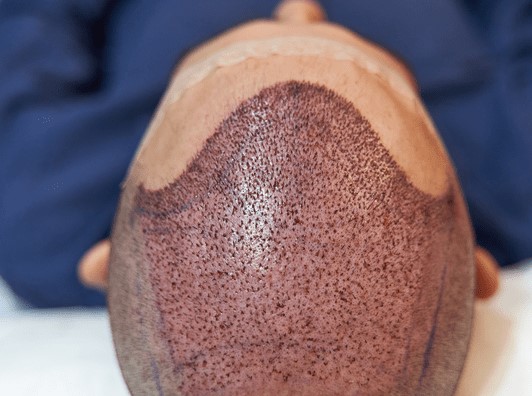
DHI Hair Transplant in Turkey
DHI, or Direct Hair Implantation, is one of the most heavily marketed terms in the Turkish hair transplant industry.
It is often presented as a completely separate alternative to FUE. In reality, the distinction is more specific.
According to the International Society of Hair Restoration Surgery (ISHRS), DHI generally refers to an implantation technique using an implanter device, particularly a sharp implanter. It is not, by itself, a separate method of harvesting donor hair. In many procedures marketed as DHI, the grafts are still harvested using FUE and then implanted using an implanter pen. ISHRS
Understanding this difference is important when comparing hair transplant clinics in Turkey.
This guide explains how DHI works, how it differs from conventional FUE implantation, its potential advantages and limitations, recovery, results, and the questions patients should ask before choosing a clinic.
What Does DHI Mean?
DHI stands for Direct Hair Implantation.
The term is commonly used by clinics to describe a procedure in which harvested follicular units are loaded into an implanter pen and inserted into the recipient area.
An implanter is a device that holds a graft inside a narrow channel. The graft is inserted into the scalp by activating a plunger.
Implanters can be:
- sharp, where the device creates the recipient incision and places the graft,
- or blunt, where the graft is inserted into a previously created incision.
The ISHRS notes that the term DHI is used inconsistently in marketing and should not be treated as a completely separate hair transplant method. ISHRS
Is DHI the Same as FUE?
Not exactly, but the two terms describe different stages of the procedure.
FUE refers primarily to how follicular units are surgically excised and removed from the donor area.
DHI generally refers to how grafts are implanted into the recipient area.
Therefore, a procedure advertised as:
“DHI hair transplant”
may actually involve:
FUE harvesting + implanter-based placement.
This is why advertisements such as “DHI vs FUE” can sometimes be misleading.
A more accurate comparison is:
FUE with forceps implantation vs FUE with implanter implantation.
How Does a DHI Hair Transplant Work?
A typical procedure marketed as DHI may involve the following stages.
1. Hair and Scalp Assessment
The physician evaluates:
- the degree of hair loss,
- donor density,
- hair caliber,
- scalp condition,
- expected future hair loss,
- and the number of grafts that can be safely harvested.
2. Hairline Planning
The recipient area and proposed hairline are designed.
Hairline planning should consider:
- age,
- facial proportions,
- donor capacity,
- existing hair,
- and expected future recession.
3. Donor Harvesting
Follicular units are commonly harvested using FUE.
ISHRS terminology uses Follicular Unit Excision because the process includes both making an incision around the follicular unit and extracting it. ISHRS
4. Graft Preparation
Extracted grafts are examined and preserved before implantation.
5. Loading the Implanter
Follicular units are carefully loaded into implanter devices.
6. Implantation
The graft is implanted at a planned:
- angle,
- direction,
- depth,
- and density.
These factors strongly influence the natural appearance of the final result.
What Is a DHI Implanter Pen?
The phrase “DHI pen” generally refers to an implanter device.
It is sometimes marketed under names such as:
- Choi pen,
- implanter pen,
- implantation pen,
- DHI pen.
An implanter allows the graft to be positioned without directly holding the follicular bulb with forceps.
ISHRS notes that this may potentially reduce direct manipulation of the graft bulb compared with forceps placement. ISHRS
However, the tool itself does not guarantee a better result.
The skill of the surgical team, graft handling, donor management, hairline design and implantation planning are more important than the name of the device.
DHI vs FUE: What Is the Real Difference?
The comparison is often oversimplified.
| Feature | Conventional FUE Placement | “DHI” / Implanter Placement |
|---|---|---|
| Donor harvesting | Usually FUE | Usually FUE |
| Implantation | Forceps into recipient sites | Implanter device |
| Recipient incisions | Often created before placement | May be created during implantation with a sharp implanter |
| Graft handling | Forceps may contact graft | Graft sits inside implanter |
| Separate transplant method? | FUE is a harvesting method | DHI is mainly an implantation approach |
This distinction is important when comparing clinic advertisements.
Is DHI Better Than FUE?
There is no universal answer.
The quality of a hair transplant depends on much more than whether an implanter pen is used.
Important factors include:
- surgeon experience,
- donor management,
- hairline design,
- graft survival,
- graft distribution,
- recipient-site planning,
- hair direction,
- team experience,
- and postoperative care.
Patients should be cautious when a clinic claims that DHI is automatically superior simply because of the device used.
ISHRS has specifically warned about confusing marketing terminology in hair restoration surgery. ISHRS
Potential Advantages of DHI Implantation
Implanter-based placement may offer several practical advantages in selected cases.
Controlled Graft Placement
The implanter allows the operator to control placement angle and direction during insertion.
Reduced Direct Handling of the Bulb
Because the graft is loaded into the device, the follicular bulb may be subjected to less direct forceps manipulation. ISHRS
Useful Around Existing Hair
Implanters may be useful when transplanting among existing native hairs, depending on the case and the surgical approach.
Efficient Placement in Experienced Hands
A skilled team may be able to perform consistent graft placement using implanter devices.
However, none of these advantages means that DHI is automatically superior for every patient.
Potential Disadvantages and Limitations
DHI also has limitations.
It Is Highly Operator-Dependent
An implanter does not compensate for poor planning or inexperienced handling.
Marketing Can Be Misleading
Some clinics promote DHI as a revolutionary procedure completely different from FUE.
This is not consistent with ISHRS terminology. ISHRS
Higher Price Does Not Guarantee Better Results
Some clinics charge a premium for DHI even when the underlying harvesting process is essentially the same.
Large Sessions Still Require Careful Planning
High graft numbers can place significant demands on the donor area regardless of implantation technique.
DHI Hair Transplant Cost in Turkey
Prices vary considerably between clinics.
Factors influencing cost may include:
- graft number,
- physician involvement,
- clinic reputation,
- surgical team,
- treatment package,
- accommodation,
- transportation,
- additional treatments,
- and whether the clinic charges per graft or per procedure.
Because prices change frequently, patients should treat old online price lists cautiously.
Instead of choosing a clinic based solely on the lowest quote, ask what the price includes and who performs each stage of surgery.
Why Is DHI Popular in Turkey?
Turkey has become one of the world’s largest destinations for hair transplantation.
DHI is particularly popular in clinic marketing because it is easy to present as a newer or more advanced procedure.
However, patients should focus less on branding and more on the actual surgical process.
Before booking, ask:
- How are grafts harvested?
- Who performs the extraction?
- Who designs the hairline?
- Who creates the recipient incisions?
- Who uses the implanter?
- How many procedures are performed each day?
These questions tell you much more than the word “DHI.”
Who Should Perform DHI?
Hair transplantation is surgery.
ISHRS warns patients about clinics where unlicensed personnel perform surgical steps that should be carried out by qualified medical professionals. ISHRS
The organization specifically emphasizes the importance of knowing who performs:
- donor incisions,
- recipient incisions,
- hairline design,
- and sharp-implanter placement.
Rules vary by country, but patients should always ask exactly who will perform each part of the procedure. ftfarabic.ishrs.org
Is DHI Suitable for Everyone?
Not necessarily.
Suitability depends on:
- degree of hair loss,
- donor availability,
- hair characteristics,
- age,
- scalp condition,
- previous surgeries,
- and long-term hair-loss pattern.
A patient with limited donor capacity may require a different strategy from someone with early frontal recession.
The implantation device cannot overcome poor donor supply.
DHI for Hairline Restoration
DHI is frequently used in frontal hairline procedures.
The final appearance depends on:
- hairline shape,
- irregularity,
- graft angle,
- single-hair graft placement,
- density,
- and transition-zone design.
A natural hairline should not look perfectly straight or overly dense at the leading edge.
The surgeon’s design and implantation decisions are more important than the brand of implanter used.
DHI for Crown Hair Transplant
The crown is more challenging because hairs grow in a spiral pattern.
Achieving natural crown coverage requires careful control of:
- direction,
- angle,
- graft distribution,
- and available donor supply.
Large crown areas can consume a significant number of grafts.
For this reason, surgeons may prioritize the frontal scalp in patients with limited donor capacity.
DHI Hair Transplant Recovery
Recovery is broadly similar to other FUE-based hair transplant procedures.
Patients may experience:
- redness,
- swelling,
- small crusts,
- tenderness,
- temporary numbness,
- and short-term shedding.
Scabs usually begin resolving within the early postoperative period according to the clinic’s washing protocol.
Patients should follow the clinic’s postoperative instructions carefully.
When Does DHI Hair Start Growing?
Hair transplant growth is gradual.
A typical general timeline may include:
First Weeks
Transplanted hairs may shed.
This does not necessarily mean the graft has failed.
2–4 Months
Early new growth may begin.
4–6 Months
More visible growth often develops.
6–9 Months
Density and texture may improve.
9–12 Months
Many patients can better assess the cosmetic result.
Some areas, particularly the crown, may continue maturing for longer.
An older published case series using a direct implantation approach reported visible growth beginning around 2–3 months, with follow-up results assessed over longer periods. However, individual outcomes vary and small case series should not be treated as proof that one implantation technique is superior. PMC
Does DHI Leave Scars?
If donor grafts are harvested using FUE, small round scars can remain in the donor area.
FUE should not be described as completely scarless.
ISHRS specifically warns that FUE almost always leaves small round scars, although these may be difficult to see when harvesting is performed properly. ISHRS
Poor donor harvesting can cause:
- visible thinning,
- irregular density,
- and noticeable scarring.
Shaved vs Unshaven DHI
Some clinics offer procedures marketed as:
- shaved DHI,
- partially shaved DHI,
- unshaven DHI.
These terms mainly describe how donor or recipient hair is prepared.
They do not change the fundamental biology of transplantation.
ISHRS recommends distinguishing donor-site shaving, recipient-site shaving and implantation terminology rather than treating “unshaven” as a completely different surgical procedure. ISHRS
DHI and Existing Hair
One reason clinics may recommend implanter placement is the ability to work between existing hairs.
However, transplanting into areas containing native hair requires careful planning to minimize unnecessary trauma.
The presence of existing hair also means the patient may continue losing non-transplanted follicles later.
Hair transplantation does not stop androgenetic alopecia.
DHI and Finasteride
For patients with male pattern hair loss, medical management may still be important after surgery.
Hair transplant practice guidelines emphasize that androgenetic alopecia is progressive and hair transplantation should not be viewed as a one-time cure for ongoing hair loss. PMC
Appropriate patients may discuss treatments such as finasteride or minoxidil with their physician.
You can also read:
Finasteride Results: Timeline, Effectiveness & Side Effects
How to Choose a DHI Clinic in Turkey
Do not choose a clinic based only on:
- Instagram followers,
- “DHI” branding,
- graft number,
- discount price,
- or hotel package.
Instead, ask:
- Who is the responsible physician?
- Who examines me before surgery?
- Who designs the hairline?
- Who performs donor incisions?
- Who extracts the grafts?
- Who creates recipient sites?
- Who uses the implanter?
- How many patients are treated per day?
- How is donor capacity calculated?
- What happens if I need another transplant later?
ISHRS specifically advises patients to research who will actually perform the surgical steps rather than assuming the advertised doctor will do them. ISHRS
DHI Hair Transplant in Turkey: Pros and Cons
Potential Pros
- Precise implanter-based placement
- Reduced direct handling of the follicular bulb
- Useful in selected dense-packing situations
- May be practical around existing hairs
- Widely available in Turkey
Potential Cons
- Frequently over-marketed
- Often priced higher
- Results remain highly operator-dependent
- Does not solve donor limitations
- The term “DHI” may describe different techniques at different clinics
DHI vs Sapphire FUE
“Sapphire FUE” is another popular marketing term.
The term typically refers to using sapphire blades to create recipient incisions rather than changing the FUE donor-harvesting method itself.
ISHRS notes that many branded variations of FUE are marketing terms rather than separate recognized hair transplant methods. ISHRS
When comparing DHI and Sapphire FUE, patients should focus on:
- who performs the surgery,
- donor management,
- incision quality,
- graft handling,
- and documented results.
Is DHI Worth the Extra Cost?
Sometimes, but not automatically.
Paying more for an implanter-based procedure may be reasonable if:
- the clinic has strong documented results,
- physician involvement is high,
- the treatment plan is appropriate,
- and the team has extensive experience with the technique.
It is not worth paying a premium simply because the clinic labels the procedure “DHI.”
Our View on DHI Hair Transplant
DHI can be a useful implantation technique, but patients should understand what the term actually means.
The most important factors in hair transplantation remain:
- proper diagnosis,
- conservative donor management,
- realistic graft planning,
- natural hairline design,
- skilled graft handling,
- appropriate implantation,
- and qualified medical supervision.
A clinic using an implanter pen is not automatically better than a clinic using forceps placement.
Likewise, a clinic using conventional FUE terminology is not automatically less advanced.
The quality of the surgical plan matters more than the marketing label.
Frequently Asked Questions
Is DHI better than FUE?
Not necessarily. FUE primarily describes donor harvesting, while DHI generally describes implanter-based graft placement. The quality of the result depends more on the surgical team and treatment plan than on the terminology used.
Is DHI really a separate hair transplant method?
ISHRS states that DHI should not be marketed as a separate hair transplant method; the term is commonly used for sharp-implanter placement. ISHRS
Does DHI use FUE extraction?
In many procedures marketed as DHI, yes. Grafts are harvested using FUE and then implanted with an implanter device.
Is DHI scarless?
No. If FUE harvesting is used, small round donor scars are expected even if they are difficult to see after proper healing. ISHRS
Is DHI more expensive in Turkey?
It is often marketed at a premium, but pricing varies widely by clinic.
Does DHI heal faster?
Recovery depends on many factors, including graft number, surgical technique and individual healing. Patients should be cautious of guarantees that one branded technique always heals faster.
Can DHI be performed without shaving?
Some clinics offer partially shaved or unshaven approaches, depending on the case.
How long until DHI results are visible?
Early growth may begin after several months, while a more meaningful result generally requires many months of maturation.
How many grafts can be transplanted with DHI?
There is no universal maximum. Safe graft numbers depend on donor capacity and individual surgical planning.
Is DHI suitable for women?
It may be used in appropriately selected female patients, but the cause of hair loss should first be properly diagnosed.
Medical Disclaimer
This article is for general educational purposes only and is not individual medical advice. Hair transplantation is a surgical procedure. Patients should consult an appropriately qualified healthcare professional for diagnosis, treatment planning and discussion of risks.
Editorial Note
HairTransplantInTurkey.org aims to distinguish established surgical terminology from marketing terminology. Clinic techniques, prices and staffing models may change, so patients should verify current information directly with the clinic before treatment.