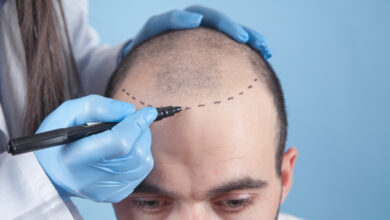
Hairline Design: Natural Appearance and Long Term Planning
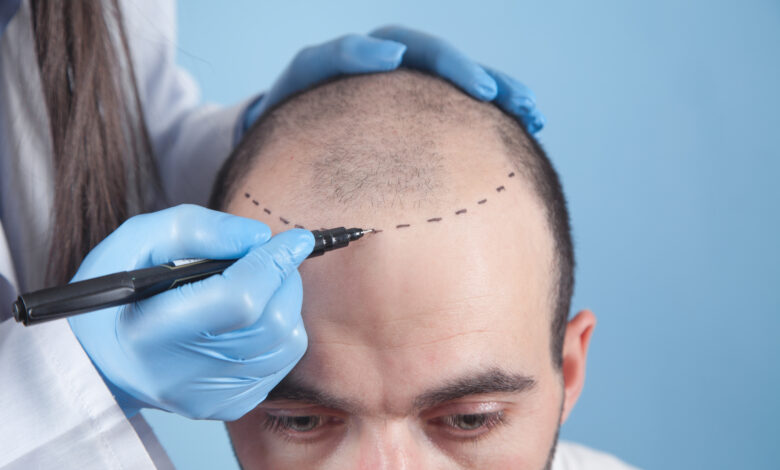
A hairline should be discussed as a design decision with long-term consequences. A low line in a digital mock-up is not evidence that the donor supply can support it or that it will remain appropriate if surrounding hair changes.
Design the line with the clinician
The ISHRS describes hairline placement as an individual aesthetic decision made in consultation with a hair-restoration physician. Your preferences matter, while the medical assessment must explain feasibility and the wider scalp plan.
Ask to see the proposed line from more than one angle. Clarify which area will be treated and how the plan relates to the existing hair rather than focusing on one measurement.
Discuss future loss and donor priorities
Ask what the appearance might be if native hair continues to thin and which options would remain. The front, mid-scalp and crown compete within the same overall donor plan. See our graft guide before equating a lower line with a better result.
Understand what the proposed result means
Request a clear explanation of the intended appearance and limits. Does the plan aim for coverage, a specific framing effect or improvement in one region? Avoid treating a computer simulation as a photographic prediction.
Use case photographs fairly
Check that a before-and-after pair uses comparable lighting, hair condition and angles. Include close views of the hairline and a wider view of the face and scalp. Note follow-up timing and any additional treatment.
Our photo-comparison guide helps keep these comparisons useful. A styled image selected by a clinic is not a measure of how all patients fare.
Questions before giving consent
- Why is this line appropriate for my overall plan?
- What coverage will remain behind it?
- How much donor reserve will be used?
- How could future loss affect its appearance?
- What alternatives would be more conservative?
If a previous hairline is unsatisfactory
Bring the original proposal and procedure record to an independent assessment. A correction may have different requirements from first-time transplantation. Our repair guide explains what to prepare without promising that every design can be reversed.
Take time to understand the plan before agreeing to it. A natural appearance is an individual goal to discuss, not a guarantee attached to a technique name.
Practical takeaway: Review hairline placement from more than one angle and ask how the design uses donor supply over the long term.
A front-view photograph makes a new hairline appear like a single curve, but the treatment proposal needs a broader explanation. Ask how the proposed outline looks from the side, what appearance is planned at the temples, how much donor capacity it requires and what could happen if untreated hair continues to recede behind the new line.
| Decision | Evidence to ask for |
|---|---|
| Overall position | A marked proposal shown alongside the whole face rather than a cropped forehead |
| Temple transition | Views from both sides and an explanation of the intended framing |
| Coverage behind the line | The relative priority of the front, mid-scalp and crown |
| Long-term reserve | How the plan changes if further native hair is lost |
How to compare two hairline designs fairly
Ask each clinician to explain the same starting photograph rather than supplying a digitally enhanced “after” image alone. Record whether each option calls for a different recipient area, graft distribution or follow-up plan. A lower hairline can be more demanding on donor supply; a conservative proposal may reflect an effort to account for future changes, but neither choice should be made without an individual examination.
ISHRS describes hairline placement as a shared patient-physician decision that considers the broader restoration plan. See its patient guide on discussing a new hairline. When browsing examples, check the follow-up date, styling and comparable donor photographs rather than choosing the most dramatic before-and-after.
Make the proposed hairline reviewable before surgery
Ask the physician to draw the proposed outline on your scalp and review it from the front, both sides and above. Discuss the temples, transition irregularity, hair direction and how the outline fits your face at your current age. Then ask how the plan would look if native hair behind it continued to thin. A very low or sharply straight line can use donor hair that might be needed later; a design should account for the longer-term pattern, not only a single photograph.
Take time to understand the drawing and keep a copy with your records. A sales rendering is not a clinical assessment. The ISHRS patient guide to a new hairline explains why placement is an individual physician-patient decision and should consider possible future loss.
Sources and editorial information
Sources checked: 13 October 2026. Read our editorial approach. This is an educational overview, not a diagnosis or a personalised postoperative or medication plan.