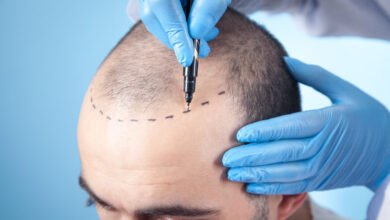
Crown Hair Transplant: Coverage, Grafts and Expectations
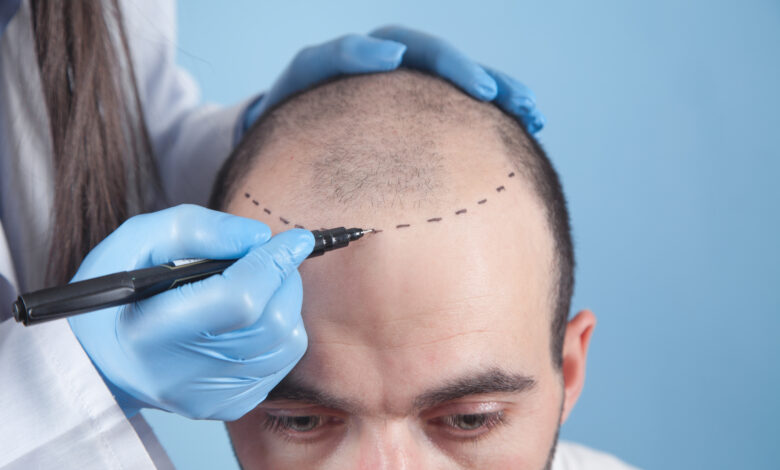
The crown, or vertex, should be discussed as a separate treatment zone. A plan that restores the front does not necessarily include the crown, and a total graft count does not tell you how much coverage each area receives.
Why crown planning is different
The IAHRS explains that the crown’s rotational hair pattern affects graft direction and the way coverage appears. This makes a simple comparison with frontal work misleading. Ask the surgeon to show the intended area and explain how the whorl will be approached.
Coverage priorities and donor reserve
Discuss the front, mid-scalp and crown together before allocating donor hair. Ask what the surgeon considers achievable now, what might need another session and how further loss would affect the plan. A crown-only quote and a whole-scalp quote cannot be compared by graft number alone.
Use the graft-planning guide to organise those questions. Do not interpret a calculator range as a guarantee of complete coverage.
Comparing crown patient cases
Check that the photographs actually show the treated crown. A front-view improvement may say little about a region not visible in that view. Look for an overhead angle, consistent lighting, stated follow-up and information about medication or a second operation.
Our archive includes a Dr. Keser crown-planning case. It is a historical patient account, not a result template for everyone with crown thinning. Verify the case’s treatment area and follow-up before drawing conclusions.
Questions about timing
Ask when the crown should be reviewed and what changes would justify an examination. Do not decide on another procedure merely because a comparison image comes from an earlier follow-up. The results timeline explains how to record useful progress photographs.
Price and package scope
Obtain a written statement of what will be treated. Does the quoted count cover the front only, the crown only or several zones? What changes if the donor assessment reduces the available count? See the Turkey cost guide for package comparisons.
A consultation checklist
- Show me the crown boundary and intended coverage.
- Explain priorities across all thinning regions.
- Describe the remaining donor reserve.
- State the expected review schedule.
- Show comparable cases with crown and donor views.
The purpose is a realistic plan that fits your donor supply and long-term goals, not a universal graft target for every crown.
Practical takeaway: Ask the clinician to explain treatment priorities for crown and frontal scalp together, with donor reserve and realistic visual outcomes.
What a crown photograph needs to show
The vertex is not easy to compare in a cropped frontal photograph. A useful case record includes an overhead view, the surrounding mid-scalp, a donor-area view and the dates of each photograph. Ask whether the patient also had frontal work or additional hair-loss treatment so that the visible change is not incorrectly credited to crown grafts alone.
| Comparison factor | Why it matters |
|---|---|
| Whorl direction | Hair direction affects how coverage is perceived in the crown |
| Lighting and camera angle | Strong overhead light may make scalp visibility look different |
| Hair length and styling | Longer hair can conceal thinning without a change in implanted density |
| Other areas treated | A shared graft budget may prioritise the frontal scalp or mid-scalp |
| Procedure and photo dates | Images taken at different follow-up stages should not be equated |
Compare two possible coverage priorities
Imagine the same patient asks one clinic to concentrate on the crown and another to prioritise the frontal scalp. A difference in recommended graft allocation may reflect the patient’s visual priorities and available donor hair rather than an error by either clinician. Ask each clinic to provide a marked treatment map, its reasoning and the likely effect of further hair loss in untreated regions.
The crown may be a future-stage decision for some individuals, while others may discuss it earlier. No website can select the right order from a photograph alone. The American Academy of Dermatology’s transplant information describes the importance of healthy donor hair and individual assessment. Use that guidance when interpreting provider claims of full coverage.
Why crown planning needs a separate conversation
The crown has a changing whorl pattern, so the direction and distribution of existing hair matter as much as the area’s size. Ask the surgeon to mark the proposed treatment boundary, show how grafts would follow your natural growth direction and explain what coverage is realistic with the available donor supply. A crown-only plan may compete with future needs in the frontal or mid-scalp regions; ask the clinician to explain the trade-off for your own pattern.
Compare photographs only when the angle, lighting, hair length and follow-up timing are similar. A single top-down image cannot establish density or donor safety. The AAD transplant guide notes that candidacy depends on examination, healthy donor hair and realistic expectations—not simply the area a patient wants covered.
Sources and editorial information
Sources checked: 13 October 2026. Read our editorial approach. This is an educational overview, not a diagnosis or a personalised postoperative or medication plan.