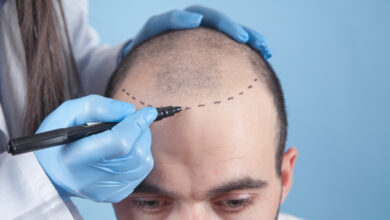
Is Hair Transplant Painful? What to Expect Before, During & After

Is Hair Transplant Painful? What Patients Can Expect
One of the most common concerns before a hair transplant is simple:
Does a hair transplant hurt?
For most patients, the answer is that the procedure is usually much more uncomfortable than truly painful.
Modern hair transplant procedures such as FUE and DHI are typically performed under local anesthesia. This means the scalp is numbed before extraction and implantation begin.
The most noticeable discomfort is usually during the anesthetic injections themselves. After the scalp becomes numb, most patients feel pressure, pulling or movement rather than sharp pain.
That said, pain tolerance varies from person to person, and some discomfort can occur during recovery.
Is Hair Transplant Surgery Painful?
Hair transplantation is generally performed while the patient is awake.
Local anesthesia is used to numb the donor and recipient areas.
During the procedure, patients may feel:
- Pressure
- Pulling
- Touch
- Vibration
- Movement on the scalp
They should not normally feel significant sharp pain once the anesthetic is working properly.
If discomfort develops during the operation, additional local anesthetic can usually be given.
What Is the Most Painful Part of a Hair Transplant?
For many patients, the most uncomfortable part is the injection of local anesthetic.
The anesthetic is injected into the scalp before the extraction and implantation stages begin.
This can cause:
- Brief stinging
- Burning
- Pressure
- Tightness
The discomfort usually lasts only a short time.
Once the area is numb, the extraction and implantation stages are generally much easier to tolerate.
Does FUE Hair Transplant Hurt?
FUE, or Follicular Unit Excision, involves removing individual follicular units from the donor area with small punches.
Because the donor area is anesthetized, patients usually do not feel each follicle being extracted.
Instead, they may notice:
- Pressure
- Repetitive movement
- Mild vibration
- A pulling sensation
After the procedure, the donor area can feel sore or tender for several days.
You can read more about technique differences in our guide to FUE vs DHI Hair Transplant.
Does DHI Hurt More Than FUE?
Not necessarily.
DHI usually refers to the implantation stage, where grafts are placed using an implanter pen.
The extraction stage is still commonly performed with FUE.
Pain levels therefore depend more on:
- Local anesthesia
- Number of grafts
- Duration of the procedure
- Individual pain sensitivity
- Surgical technique
- Recipient-area density
- Scalp sensitivity
There is no simple rule that DHI is always more painful or less painful than FUE.

How Painful Are the Anesthetic Injections?
This is usually the part patients notice most.
The first injections can cause a short period of stinging or burning.
After the initial area becomes numb, later injections are often easier to tolerate.
Some clinics may use techniques designed to reduce discomfort, such as:
- Smaller needles
- Slow injection
- Vibration devices
- Cooling
- Needle-free pressure devices
However, no method can guarantee completely painless anesthesia.
Can You Feel the Hair Grafts Being Removed?
Usually not as sharp pain.
Once the donor area is fully numb, patients may feel pressure or movement while grafts are being extracted.
If the anesthetic begins to wear off, the patient should tell the surgical team.
Additional anesthetic can then be administered.
Can You Feel the Grafts Being Implanted?
The recipient area is also anesthetized before implantation.
Patients may feel pressure, tapping or movement, but significant pain should not normally occur.
The sensation may become more noticeable during very long procedures simply because the scalp has been manipulated for several hours.
How Long Does a Hair Transplant Take?
The procedure can last several hours.
The exact duration depends on:
- Number of grafts
- Technique
- Size of the recipient area
- Number of surgical staff
- Donor-area characteristics
- Hairline complexity
Large sessions can take most of the day.
Even when pain is minimal, sitting or lying in the same position for many hours can become tiring.
Does the Scalp Hurt After a Hair Transplant?
Some soreness after the procedure is normal.
The donor area is usually more sensitive than the recipient area.
Patients may notice:
- Tenderness
- Tightness
- Mild burning
- Itching
- Swelling
- Sensitivity while sleeping
These symptoms are usually temporary.
How Long Does Pain Last After a Hair Transplant?
For many patients, the strongest discomfort occurs during the first few days.
The scalp generally becomes more comfortable as healing progresses.
A typical pattern may look like this:
First 24 Hours
Mild soreness, tightness or burning may occur.
Days 2–4
Tenderness may continue, particularly in the donor area.
Days 5–7
Discomfort usually decreases significantly.
After One Week
Most patients experience little or no significant pain.
Recovery can vary depending on the number of grafts and individual healing response.
Is the Donor Area More Painful Than the Recipient Area?
Often, yes.
The donor area contains many small extraction sites.
This can create soreness, tightness or sensitivity.
The recipient area may feel tender, but it is often less painful than the donor region.
Does Hair Transplant Swelling Hurt?
Swelling itself is usually uncomfortable rather than painful.
Swelling can develop around:
- Forehead
- Temples
- Upper eyelids
It often appears a few days after surgery and gradually improves.
Severe swelling, increasing pain, fever or unusual discharge should be reported to a doctor.
What Does Hair Transplant Pain Feel Like?
Patients often describe the discomfort as:
- Soreness
- Tightness
- Mild burning
- Tenderness
- Pressure
Severe continuous pain is not considered typical.
Is Hair Transplant More Painful Than Dental Work?
Pain perception is very individual.
Some patients compare the local anesthetic injections to dental anesthesia.
Once numbness develops, the procedure itself is usually tolerated well.
The recovery discomfort may feel more like scalp soreness than acute surgical pain.
Can Pain Medication Be Used After Hair Transplant?
Clinics may recommend pain medication after the procedure.
Patients should follow the instructions provided by their medical team.
The appropriate medication depends on:
- Medical history
- Allergies
- Other medications
- Kidney or liver conditions
- Bleeding risk
Patients should not take additional medication without medical advice.
Is Severe Pain Normal After a Hair Transplant?
No.
Severe or worsening pain should be taken seriously.
Patients should contact their clinic if pain is:
- Increasing rather than improving
- Severe and persistent
- Associated with fever
- Accompanied by pus or unusual discharge
- Combined with strong redness or warmth
- Associated with significant swelling that continues to worsen
These symptoms may require medical evaluation.
Can a Hair Transplant Be Completely Painless?
It is difficult to guarantee a completely painless experience.
The scalp must be anesthetized, and anesthetic injections can cause brief discomfort.
However, once the anesthetic has taken effect, most patients tolerate the procedure well.
Claims such as “100% painless hair transplant” should therefore be viewed cautiously.
Does the Number of Grafts Affect Pain?
It can.
A larger session generally means:
- More extraction sites
- More implantation sites
- Longer procedure time
- More local anesthetic
- Greater tissue manipulation
However, the relationship is not exact.
A well-managed 4,000-graft procedure may still be comfortable, while a smaller poorly managed procedure may feel more unpleasant.
Does Hair Transplant Pain Depend on the Surgeon?
Technique can make a difference.
Pain and discomfort may be influenced by:
- Injection technique
- Punch size
- Extraction technique
- Recipient-site preparation
- Surgical time
- Tissue handling
- Postoperative instructions
This is another reason why the medical team matters more than marketing terminology.
How Can Discomfort Be Reduced?
Patients can help reduce discomfort by following clinic instructions carefully.
These may include:
- Taking prescribed medication correctly
- Sleeping in the recommended position
- Avoiding pressure on the recipient area
- Avoiding alcohol
- Avoiding smoking if instructed
- Not scratching the scalp
- Following washing instructions
- Avoiding strenuous exercise during early recovery
Patients should use only products approved by their clinic.
When Can You Sleep Normally Again?
Sleeping can be uncomfortable during the first few nights.
Clinics often recommend sleeping with the head elevated to reduce swelling and avoid pressure on the transplanted area.
The exact duration varies.
Patients should follow their clinic’s postoperative instructions.
Is Hair Transplant Pain Worth Worrying About?
For most patients, pain is not the main difficulty.
Long procedure time, swelling, sleeping position and temporary scalp sensitivity are often more noticeable than pain itself.
The procedure is generally manageable when local anesthesia is effective and the surgical team responds quickly to discomfort.
Frequently Asked Questions
Is hair transplant painful during surgery?
Usually not significantly once local anesthesia is working. Patients may feel pressure, pulling or movement.
What is the most painful part?
For many patients, the local anesthetic injections are the most uncomfortable part.
How many days does pain last?
Mild soreness may last several days, with most discomfort improving within the first week.
Is DHI more painful than FUE?
Not necessarily. Pain depends more on anesthesia, graft numbers, surgical time and individual sensitivity.
Does the donor area hurt?
It can feel sore or tender for several days because of the extraction sites.
Is severe pain normal?
No. Severe or worsening pain should be reported to the treating clinic.
Final Thoughts
Hair transplantation is usually not as painful as many patients expect.
The anesthetic injections can be uncomfortable, but once the scalp is numb, most patients experience pressure and movement rather than significant pain.
After surgery, mild soreness, tightness and tenderness are common for a few days.
The most important factors affecting comfort include:
Effective local anesthesia.
Careful surgical technique.
Good postoperative care.
Clear communication with the medical team.
Patients should not hesitate to tell the surgical team if they feel pain during the procedure.