Serdar Gökrem 3100 Grafts: Age 46, NW6/7 Hair Transplant Result

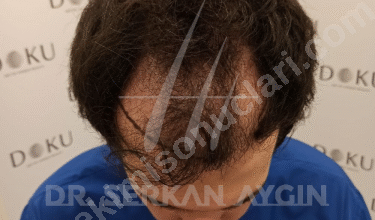
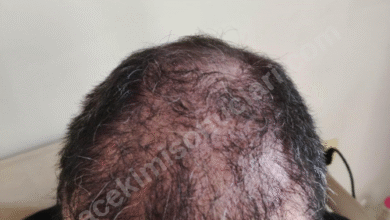
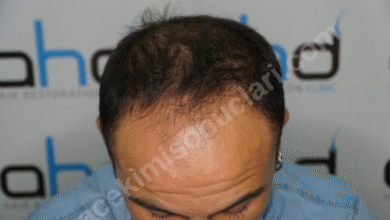
Patient case archive: This page follows a 46-year-old patient described in the source as Norwood 6/7, with a reported 3,100-graft procedure associated with Dr. Serdar Gökrem. Read the photo sequence with the extensive starting hair-loss pattern and donor appearance in view; the graft total alone cannot establish likely coverage or a typical result.
Archive Information and Verification
This is an archived patient-reported record, not a clinical study or a measure of the clinic’s average outcomes. This editorial update does not independently verify the original source, photographs, exact graft count or current clinic workflow.
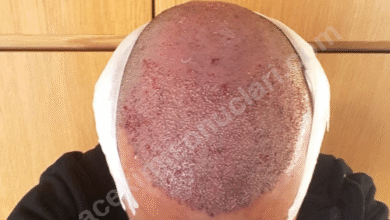
The operation date and the latest photograph date should be read from the recorded case details below. Where a date or follow-up is not recorded, do not infer it from the article’s publication date or an image filename. Early healing photos do not establish final growth.
Compare this entry with our patient archive and guide to evaluating patient reviews. Editorial context updated: 12 October 2026.
Case summary
- Doctor: Dr. Serdar Gökrem
- Location: Ankara
- Patient age: 46
- Hair-loss pattern: reported as NW6/7
- Grafts: 3,100
- Case date: 16 February 2021
The NW6/7 classification and 3,100-graft count are drawn from this historical patient report, not independently verified clinical records. Advanced Norwood cases are especially important for donor management because the bald area can be much larger than the available donor supply. A lower graft count may therefore reflect a conservative strategy rather than an attempt to create uniform high density across the entire scalp.
For current doctor information, see our Dr. Serdar Gökrem hair transplant profile.
What to look for in this case
Coverage versus density: In advanced hair loss, 3,100 grafts may be distributed to prioritize a frontal frame rather than densely cover the entire affected scalp. The archived photos should be interpreted alongside donor limitations, graft placement and follow-up timing. Read our donor-area planning guide.
When reviewing the photos, pay attention to where the 3,100 grafts were concentrated, how the frontal frame was designed and how the donor area looks over time. In advanced hair loss, strategic distribution often matters more than chasing the highest possible graft number.
Because the patient expected more than one procedure, this case is also useful for understanding staged planning in advanced hair loss. A first session may prioritize the frontal frame and cosmetically important zones while preserving donor supply for later work.
Patient-reported update
The patient said he had been researching hair transplantation for a long time, including forum discussions and other patient experiences, before deciding to proceed.
At the time of this update, the procedure had been completed about one week earlier. The patient expected the overall restoration to require two or possibly three sessions, depending on how much scalp and beard donor supply remained available.
That point is especially relevant in a reported Norwood 6/7 case. With a large recipient area and a finite donor supply, staged planning can be more important than trying to cover everything in a single procedure.
Why staged planning matters here
- Advanced hair loss: the bald area may be much larger than the available donor supply.
- First-session priorities: the frontal frame and cosmetically important zones may be treated first.
- Future donor reserve: preserving scalp and beard donor options can matter if another procedure is planned.
- Expectations: a 3,100-graft session should be judged by how the grafts were distributed, not by the number alone.
For broader context, see our donor area guide, Hair Transplant Planner and patient result archive.
This remains a patient-reported historical case rather than a guarantee of how another advanced-hair-loss case will respond.
The photo sequence below is most useful when read together with the reported graft count, Norwood stage and staged-treatment plan.