Norwood Scale: Hair Loss Stages and Transplant Planning
The Hamilton–Norwood scale describes patterns of male hair loss. It is a communication tool, not a diagnosis, prediction of future loss or formula that determines how many grafts you should receive.
What the scale describes
Norwood’s classification was published in 1975. In broad terms, the stages move from little recession through more pronounced frontal or vertex loss to extensive loss across the top. Different patterns and variants exist; a single front photograph does not always show the full picture.
Ask a clinician which pattern applies and which parts of the scalp should be assessed. The classification does not replace investigating why hair is being lost.
Why the same stage does not mean the same operation
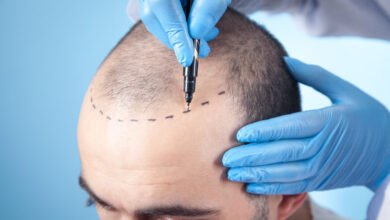
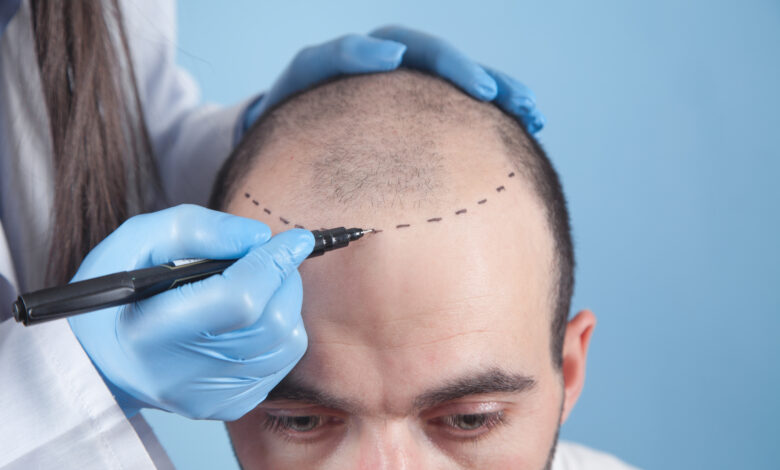
Stage labels do not specify donor density, hair characteristics, previous extraction or the area actually being treated. Two proposals may use the same label while aiming for different coverage. Request a marked plan rather than comparing labels alone.
Stages and graft estimates
Do not treat an online stage-to-graft table as a surgical prescription. Use a broad estimate to discuss the planned region, proposed distribution and donor reserve. Our graft guide explains the questions behind a personalised count.
A recorded Norwood description in a patient archive is normally part of that record; it is not an independent reassessment of the patient’s scalp by this website.
Limits of photographic self-assessment
Lighting, hairstyle, wet hair and the angle can alter apparent coverage. Include top and crown views when requesting a consultation, and let the provider explain what still requires examination. Sudden or patchy changes should not simply be assigned a higher stage and treated as ordinary progression.
Using the planner
Our educational planner uses limited inputs and cannot measure the donor area or confirm suitability. Read the output as a starting point for questions, not approval to pursue an advertised count.
Useful questions at the consultation
- What diagnosis explains the pattern?
- Which regions will actually be treated?
- How do donor findings affect the plan?
- What does future loss mean for today’s hairline?
- Should treatment or observation come before surgery?
If surgery may not be appropriate, start with our candidate-assessment guide. A scale describes appearance; a medical plan must explain the individual decision.
Practical takeaway: Use a Norwood stage to describe visible patterns, not to diagnose hair loss or prescribe a graft count.
How to read a stage number without assuming a treatment
The Hamilton–Norwood classification is a way to describe a pattern of male hair loss. Stage names are not measurements of donor density, a prediction of future hair loss or recommendations for particular graft counts. Hair characteristics, prior procedures and the clinician’s diagnosis may create major differences between people assigned similar patterns.
| Question the scale can help frame | Question it cannot answer by itself |
|---|---|
| Is frontal recession or crown thinning part of the visible pattern? | What medical diagnosis explains the changes? |
| What are the broad areas of visible loss? | How much donor hair can safely be used? |
| How does a dated photograph compare with an earlier photograph? | Which treatment, if any, is suitable for this patient? |
| Which regions should be discussed at consultation? | What surgical result can be guaranteed? |
A useful photo record for a medical consultation
Use a frontal, both temporal, top and crown view with the date recorded. Try to maintain similar hair length, lighting and camera distance when comparing the same person over time. Do not hide gaps in the record or present a different person’s photographs as a typical outcome. If the loss pattern changes unexpectedly, seek a medical assessment rather than reassigning a stage from a web chart.
The original Norwood publication explains the historical classification. For decisions about transplant suitability and expected results, the American Academy of Dermatology’s patient overview gives broader clinical context. The classification and a calculator should both be treated as discussion aids, not clinical approval.
What the Norwood scale can—and cannot—tell you
The Norwood-Hamilton scale is a shorthand for common stages of male-pattern hair loss, from limited recession through more extensive front and crown loss. It helps describe a pattern during discussion, but it does not diagnose the cause of shedding, measure donor capacity or determine a graft count. People can also have patterns that do not fit neatly into one stage.
Use the stage as a starting point for questions: is the pattern stable, what areas matter most to you, and how could continued loss change the plan? A clinician may recommend evaluating the cause or considering medical treatment before surgery, especially when the pattern is still evolving. The American Academy of Dermatology’s male-pattern hair loss guide discusses diagnosis and treatment options; only an individual assessment can translate that into a surgical plan.
Sources and editorial information
Sources checked: 13 October 2026. Read our editorial approach. This is an educational overview, not a diagnosis or a personalised postoperative or medication plan.