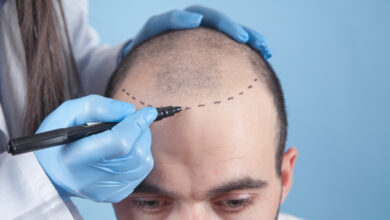
Hair Simulation After Hair Transplant: When It May Help

Scalp micropigmentation (SMP), sometimes called hair simulation, is a cosmetic technique that places tiny pigment dots in the scalp to reduce the contrast between hair and skin. It can make thinning areas look denser, but it does not grow new hair or replace transplanted follicles.
Why Hair Can Still Look Thin After a Hair Transplant
Hair transplantation redistributes existing follicles from a donor area to areas of thinning. The visual density that can be achieved depends on donor density, hair caliber, hair-to-skin contrast, the size of the thinning area and the surgical plan. A transplant can improve coverage, but it cannot recreate every follicle that existed before hair loss.
Some people still notice scalp show-through after a transplant has healed, particularly in the crown or between transplanted hairs. This can happen even after a technically successful procedure because donor supply is limited and must be distributed strategically.
FUE is one established harvesting technique, but it is not the only factor that determines the final appearance. Donor management, graft survival, placement, hair characteristics and the size of the recipient area all influence perceived density. Overharvesting the donor area can itself create visible thinning, so planning matters.
For a broader overview of planning and recovery, see our hair transplant guide.
What Scalp Micropigmentation Can and Cannot Do
A trained practitioner places many small pigment deposits in the scalp to imitate the appearance of closely cut follicles or reduce visible scalp contrast between existing hairs. SMP may be used on its own or after a hair transplant once the scalp has healed and the treating clinician considers the timing appropriate. It is cosmetic camouflage: it does not create new follicles or stop progressive hair loss.
Pigment can fade over time and may need touch-ups. Results vary with the pigment system, skin type, sun exposure, technique and aftercare. Rather than relying on marketing labels such as “organic” or “inorganic,” ask exactly what pigment system is being used, whether it is intended for scalp micropigmentation, and what hygiene and sterilization standards the practitioner follows.
For more detail, see our scalp micropigmentation guide.
When It May Be Considered After Hair Transplantation
Decision point: SMP is a cosmetic appearance treatment, not a substitute for evaluating persistent or progressive hair loss. Before scheduling it after transplantation, confirm that the scalp has healed, discuss pigment-related risks and the possibility of future transplant procedures with the treating clinician, and request healed examples under consistent lighting.
- Visible scalp remains between transplanted hairs after the result has matured.
- The crown still looks thin because donor supply could not provide complete visual density.
- There is strong contrast between scalp color and hair color.
- Minor scars or donor-area contrast need cosmetic camouflage.
Timing and Coordination After Surgery
There is no universal safe number of weeks after a transplant for scalp micropigmentation. Healing, inflammation, scarring, individual risk factors and the maturity of the transplant result matter. Ask the treating clinician to examine the scalp before any needle-based cosmetic procedure and do not book SMP over irritated or incompletely healed skin.
Risks and Choosing a Practitioner
Possible problems include infection, allergic reactions, scarring and an unnatural appearance if pigment color, dot size or hairline design is poorly matched. People who are prone to keloid scarring should discuss the risk with a qualified healthcare professional before treatment.
Before choosing a practitioner, review healed before-and-after examples, ask about hygiene and single-use needle protocols, confirm what pigments are used, and discuss how the proposed shade and hairline design will age. If SMP is being considered after a transplant, coordinate timing with the clinician who performed or is following the transplant.
Questions to Ask Before Scalp Micropigmentation
- Has my scalp fully healed, and has the transplant result had time to mature?
- Can the practitioner show healed results under consistent lighting?
- What pigment, hygiene procedures and single-use equipment will be used?
- How might the pigment look if my surrounding hair continues to thin?
- What are the options if the colour fades or the result needs correction?
How to Judge a Healed SMP Result
Assess examples taken after full healing, not just immediately after pigment placement. Look at the hairline under normal daylight and from different angles, and ask whether the result blends with existing hair when it is worn at its usual length. Discuss how fading or future hair loss could affect the appearance over time.
Key Takeaway
Scalp micropigmentation can make selected areas look visually denser after a hair transplant, but it should be viewed as cosmetic camouflage rather than a substitute for follicles. The best result depends on realistic expectations, appropriate timing after healing and an experienced practitioner using safe techniques.