Hair Transplant in Turkey: Cost, Procedure, Clinics & What to Expect

Turkey has become one of the world’s best-known destinations for hair transplantation.
Every year, international patients travel to cities such as Istanbul, Ankara and Antalya for FUE, DHI and other hair restoration procedures.
The reasons are easy to understand: experienced clinics, a large medical-tourism industry, competitive pricing and convenient treatment packages.
However, choosing a hair transplant in Turkey should not be based on price alone.
Hair transplantation is surgery. The result can affect both your appearance and your donor area permanently.
This guide explains how hair transplantation in Turkey works, what FUE and DHI actually mean, how to compare clinics, what to expect during recovery, possible risks and what patients should check before booking.
For related planning, see our Hair Transplant Cost in Turkey guide and our Turkey patient reviews guide.
Why Is Turkey Popular for Hair Transplantation?
Turkey has developed a large hair-transplant industry serving both domestic and international patients.
Many clinics offer packages that may include:
- Hair transplant procedure
- Hotel accommodation
- Airport transfers
- Clinic transportation
- Translation
- Medication
- Postoperative care products
- Follow-up communication
Competitive pricing is another major reason patients consider Turkey.
However, the size of the industry also means quality can vary significantly between providers.
Patients should distinguish between a professionally supervised medical procedure and a package that is primarily marketed as inexpensive medical tourism.
How Does a Hair Transplant in Turkey Work?
The overall process is similar to hair transplantation elsewhere.
A typical procedure may involve:
- Medical consultation
- Hair-loss and donor-area evaluation
- Hairline design
- Donor-area preparation
- Local anesthesia
- Graft extraction
- Preparation of the recipient area
- Graft implantation
- Postoperative instructions
- Follow-up
The exact process depends on the clinic and technique.
The most important issue is not simply which technique name appears in the package.
It is who performs each step and how the procedure is planned.
What Is FUE Hair Transplant?
FUE stands for Follicular Unit Excision, historically also called Follicular Unit Extraction.
During FUE, individual follicular units are removed from the donor area using small punches.
The donor area is usually located at the back and sides of the scalp.
After extraction, the grafts are prepared and transplanted into the recipient area.
One advantage of FUE is that it does not create the long linear scar associated with FUT strip surgery.
However, FUE should not be marketed as completely scarless.
The International Society of Hair Restoration Surgery notes that FUE usually leaves small round scars and that poor technique can lead to visible donor thinning or scarring. ISHRS
What Is DHI Hair Transplant?
DHI commonly stands for Direct Hair Implantation.
The term is usually used when grafts are implanted with an implanter device.
However, DHI is often misunderstood.
In many DHI procedures:
- Grafts are harvested using FUE.
- They are then loaded into implanter pens.
- The implanter is used to place the grafts.
ISHRS specifically explains that DHI is not itself a separate hair transplant method and should not be marketed as though it replaces FUE entirely. ISHRS
You can read more in our detailed FUE vs DHI Hair Transplant guide.

Is Sapphire FUE Different?
The term Sapphire FUE usually refers to the material used for recipient-site blades rather than an entirely different method of harvesting hair.
Marketing terms such as:
- Sapphire FUE
- Gold FUE
- Ice FUE
- Micro FUE
- Nano FUE
should therefore be interpreted carefully.
ISHRS notes that many of these marketing names are not recognized as separate established transplantation methods. ISHRS
Patients should focus on the treatment plan and medical team rather than the branding.
Who Is a Good Candidate for Hair Transplantation?
A suitable candidate generally needs:
- A clear diagnosis
- Adequate donor density
- A stable or reasonably predictable hair-loss pattern
- Healthy scalp tissue
- Realistic expectations
- Sufficient donor follicles
Hair transplantation is not appropriate for every type of hair loss.
For example, active alopecia areata or certain forms of inflammatory or scarring alopecia may require medical treatment rather than immediate surgery.
The cause of hair loss should be determined before transplantation.
How Is the Donor Area Evaluated?
The donor area is one of the most important factors in hair transplantation.
A responsible clinic should consider:
- Donor density
- Hair thickness
- Follicular-unit distribution
- Previous procedures
- Scalp visibility
- Safe donor zone
- Future hair-loss pattern
The donor area is limited.
You cannot safely remove unlimited numbers of follicles.
Poor donor management can permanently damage the appearance of the back and sides of the scalp.
How Many Grafts Are Needed?
There is no universal graft number.
The number depends on:
- Size of the bald or thinning area
- Hairline design
- Donor capacity
- Existing hair
- Hair calibre
- Hair texture
- Scalp contrast
- Future hair loss
Be cautious when a clinic gives a very high graft estimate before properly assessing your donor area.
More grafts do not automatically mean a better result.
What Happens on the Day of Surgery?
The details vary, but a typical day may include:
Consultation and Hairline Design
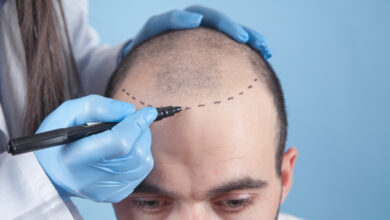
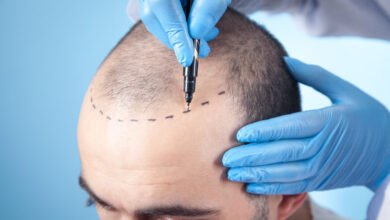
The medical team reviews the treatment plan and marks the proposed hairline.
Hair Preparation
Depending on the procedure, some or all of the donor area may be shaved.
Local Anesthesia
Local anesthetic is injected into the scalp.
This is usually the most uncomfortable stage for many patients.
Graft Extraction
Follicular units are removed from the donor area.
Graft Preparation
Grafts are examined and prepared for implantation.
Recipient Area Preparation
Sites are created according to the desired angle, direction and density.
Implantation
Grafts are placed into the recipient area using forceps, implanters or another appropriate method.
Large procedures may take several hours.
Is a Hair Transplant in Turkey Painful?
Hair transplantation is normally performed under local anesthesia.
Patients may feel discomfort during anesthetic injections, but once the scalp is numb, they usually feel pressure or movement rather than sharp pain.
After surgery, patients may experience:
- Tenderness
- Tightness
- Mild pain
- Swelling
- Itching
The NHS notes that a tight, achy or swollen scalp and temporary scabbing are common after transplantation. nhs.uk
Read our full guide: Is Hair Transplant Painful?
How Long Does Recovery Take?
Most patients recover relatively quickly.
A general timeline may look like this:
First 2–3 Days
Mild swelling and tenderness may occur.
First Week
Small crusts remain around the transplanted follicles.
7–14 Days
The scalp generally looks significantly more healed.
First 1–3 Months
Many transplanted hairs may shed.
Around 3–6 Months
New growth may begin.
6–12 Months
Density becomes increasingly visible.
12–18 Months
The result continues to mature.
Recovery varies between patients.
Is Hair Transplantation in Turkey Safe?
Hair transplantation can generally be performed safely when appropriate medical standards are followed.
However, location alone does not determine safety.
The important questions are:
- Who performs the surgery?
- Are they appropriately licensed?
- Is the procedure medically supervised?
- Is sterile technique used?
- Is the patient properly diagnosed?
- Is the donor area managed safely?
- Is postoperative care available?
ISHRS continues to warn patients internationally about unlicensed personnel performing substantial parts of hair restoration surgery. Its position is that procedures involving skin incisions, including FUE harvesting and recipient-site creation, are surgical procedures requiring appropriately trained and licensed professionals. fightilemucadele.ishrs.org
The Difference Between a Clinic and a Hair Transplant “Factory”
High-volume clinics are sometimes described informally as hair transplant factories.
This does not mean every large clinic is unsafe.
The concern is whether individualized medical care is replaced by a production-line approach.
Questions to ask include:
- How many patients are operated on each day?
- Who designs the hairline?
- Who performs the extraction?
- Who creates recipient sites?
- Who performs implantation?
- Is the same doctor responsible throughout the procedure?
Patients should understand exactly who is performing the surgery.
Who Should Perform the Surgical Steps?
This is especially important for international patients.
According to ISHRS guidance, diagnostic evaluation, surgical planning, donor harvesting, hairline design, recipient-site creation and management of medical issues should be performed by appropriately licensed and trained medical professionals within the rules of the country where the procedure occurs. ISHRS
Before booking, ask for:
- Doctor’s full name
- Medical credentials
- Licence information
- Role during surgery
- Surgical experience
Do not assume that the doctor shown in advertising will personally perform your procedure.
What Are the Risks?
Hair transplantation is surgery, so risks exist.
Possible complications include:
- Bleeding
- Infection
- Reaction to anesthesia
- Swelling
- Folliculitis
- Temporary numbness
- Shock loss
- Poor graft growth
- Scarring
- Donor depletion
- Unnatural hairline
- Unsatisfactory density
The NHS notes that bleeding, infection, anesthetic reactions, graft failure and visible scarring are possible complications. nhs.uk
Severe pain, increasing redness, fever or unusual discharge should be medically evaluated.
What Is Donor Overharvesting?
Overharvesting occurs when too many follicles are removed from the donor area.
This may create:
- Patchy thinning
- Visible scalp
- Permanent density loss
- Uneven appearance
- Reduced options for future surgery
This is one of the most important reasons not to choose a clinic simply because it promises a very high graft count.
The goal is not to extract the maximum possible number.
The goal is to use the donor area strategically.
How Should the Hairline Be Designed?
A good hairline should look natural both today and in the future.
Important considerations include:
- Age
- Facial proportions
- Existing hair
- Donor supply
- Future hair loss
- Hair direction
- Temple design
- Natural irregularity
A hairline that is too low can consume unnecessary grafts and may become difficult to maintain if hair loss progresses.
Will the Result Look Natural?
A natural result depends on more than graft count.
Important factors include:
- Hairline design
- Use of single-hair grafts
- Graft angle
- Hair direction
- Graft distribution
- Density
- Donor characteristics
- Surgical planning
A technically successful transplant can still look unnatural if these aesthetic factors are ignored.
Are Hair Transplant Results Permanent?
Transplanted follicles usually retain many characteristics of the donor area.
However, surrounding native hair can continue thinning.
The NHS specifically advises that surgeons should design the transplant with future hair loss in mind. nhs.uk
Hair transplantation does not cure androgenetic alopecia.
Some patients may therefore need medical treatment or additional surgery later.
Hair Transplant Cost in Turkey
Prices vary considerably.
Factors affecting cost include:
- Clinic
- Doctor involvement
- Number of grafts
- Technique
- Procedure length
- Additional treatments
- Accommodation
- Transportation
- Translation
- Aftercare
Rather than focusing on a single advertised price, compare exactly what is included.
The cheapest package may not be the safest or the best value.
Likewise, a high price alone does not guarantee superior results.
Should You Choose a Clinic Based on Price?
Price matters, but it should not be the first factor.
Compare:
- Medical supervision
- Surgeon experience
- Donor planning
- Hairline design
- Case results
- Complication management
- Aftercare
- Communication
Medical-tourism packages can make the process convenient, but attractive accommodation and transfers do not improve surgical quality.
ISHRS has specifically warned that inexpensive medical-tourism marketing can sometimes attract patients to providers where unlicensed personnel perform significant parts of surgery. ISHRS
What Should Be Included in a Hair Transplant Package?
Packages vary.
They may include:
- Hair transplant
- Consultation
- Blood tests
- Medication
- Postoperative shampoo
- Hotel
- Airport transfer
- Clinic transfer
- Translator
- Follow-up
Ask for a written list.
Also ask whether there are additional charges.
How Long Should You Stay in Turkey?
This depends on the clinic and travel plan.
A typical medical-tourism itinerary may include:
- Arrival
- Consultation
- Procedure
- First postoperative check or wash
- Return travel
Some patients stay several days.
The exact timing should be discussed with the medical team, particularly if there are medical conditions or complications.
Can You Fly After a Hair Transplant?
Many international patients fly home soon after surgery.
However, patients should follow their surgeon’s instructions.
Swelling can develop during the first few days, and the recipient area requires protection.
Ask your clinic:
- When is flying appropriate?
- Can I wear a hat?
- How should I sleep?
- How should I protect the grafts?
- What happens if I develop a problem after returning home?
What Happens After You Return Home?
Aftercare should continue after travel.
A responsible clinic should provide clear instructions about:
- Washing
- Medication
- Sleeping
- Exercise
- Sun exposure
- Haircuts
- Contacting the clinic
- Sending follow-up photographs
Before travelling, make sure you know who to contact if complications occur.
How to Choose a Hair Transplant Clinic in Turkey
Before booking, ask:
- Who is the responsible doctor?
- What are their qualifications?
- Who performs the extraction?
- Who creates recipient sites?
- Who implants the grafts?
- How many procedures are performed each day?
- How is my donor area assessed?
- Why is this graft number recommended?
- How will future hair loss be managed?
- What happens if there is a complication?
- What aftercare is included?
- Can I see similar patient results?
Read our complete guide on How to Choose a Hair Transplant Clinic.
Red Flags to Watch For
Be cautious if a clinic:
- Refuses to identify the doctor
- Guarantees 100% results
- Promises unlimited grafts
- Says FUE leaves absolutely no scars
- Gives a graft estimate without donor evaluation
- Uses aggressive sales pressure
- Cannot explain who performs surgical stages
- Focuses mainly on hotel and transport
- Avoids discussing risks
- Has no clear aftercare system
ISHRS continues to emphasize physician-led, ethical hair restoration and warns patients to verify who is actually carrying out their procedure. fightilemucadele.ishrs.org
Is Turkey Better Than Other Countries for Hair Transplantation?
There is no single country that guarantees better results.
Excellent and poor clinics can exist in many countries.
Turkey’s advantages may include:
- Large number of providers
- Extensive experience with international patients
- Competitive prices
- Developed medical-tourism infrastructure
Its large market also means patients must compare providers carefully.
The quality of the surgeon and medical team matters more than the country name.
Frequently Asked Questions
Is Turkey good for hair transplantation?
Turkey has many experienced hair restoration providers and a large medical-tourism sector, but quality varies between clinics. Individual clinic assessment is essential.
Why is hair transplant cheaper in Turkey?
Operating costs, competition and medical-tourism business models can contribute to lower pricing compared with some other countries.
Is DHI better than FUE?
Not automatically. DHI generally refers to an implantation approach, while FUE describes follicular-unit harvesting.
How many grafts can be transplanted in one session?
There is no safe universal number. It depends on donor capacity, recipient area and patient characteristics.
How long do I need to stay in Turkey?
This varies by clinic and treatment plan. Many patients remain for several days around the procedure.
Is a hair transplant permanent?
Transplanted follicles can provide long-lasting growth, but native hair can continue thinning.
Can a failed hair transplant be repaired?
Sometimes, but repair procedures may be more difficult because donor supply may already have been reduced.
Is hair transplant surgery risk-free?
No. It is generally safe when properly performed, but surgical complications remain possible. nhs.uk
Final Thoughts
Turkey can be a reasonable destination for hair transplantation, but patients should approach the decision as medical surgery rather than a cheap travel package.
The most important factors are:
Correct diagnosis.
Qualified medical supervision.
Safe donor management.
Natural hairline planning.
Careful graft handling.
Realistic expectations.
Reliable postoperative support.
FUE, DHI and other technique names matter less than the quality of the people performing the procedure.
Before paying a deposit, make sure you know exactly who will be responsible for your surgery and what will happen if something does not go according to plan.