Stem Cell Hair Transplant: How It Works, Results, Cost & Evidence

Stem Cell Hair Transplant: What It Is, How It Works and What the Evidence Shows
Hair loss treatments have advanced significantly in recent years, and regenerative medicine has become one of the most discussed areas in the field. Among these emerging approaches, the term “stem cell hair transplant” is increasingly used by clinics and patients.
However, the term can be confusing.
A stem cell hair treatment is not necessarily the same as a conventional hair transplant, and current regenerative treatments do not simply create unlimited new hair follicles in bald areas.
This guide explains what stem cell hair treatments are, how they differ from FUE and DHI hair transplantation, what current research suggests, and what patients should realistically expect.
What Is a Stem Cell Hair Transplant?
The term “stem cell hair transplant” is commonly used to describe regenerative treatments that aim to support hair follicle activity using stem cells, stem-cell-derived products, cellular preparations, or related biological materials.
Unlike traditional hair transplantation, these treatments may not involve transferring thousands of intact hair follicles from a donor area to a recipient area.
Instead, the goal is generally to improve the biological environment around existing follicles and potentially encourage weakened or miniaturized follicles to function more effectively.
Researchers are currently studying several regenerative approaches, including:
- Hair follicle stem cells
- Mesenchymal stem cells
- Adipose-derived cell preparations
- Stem-cell-conditioned media
- Extracellular vesicles and exosomes
- Hair follicle organoids and laboratory-grown follicular structures
These approaches are not interchangeable, and the evidence supporting each method is different.
Current research suggests that stem-cell-related therapies may influence pathways involved in hair follicle regeneration, inflammation, angiogenesis, and dermal papilla activity. However, many of these approaches remain investigational. PubMed
How Does Stem Cell Hair Treatment Work?
Hair growth depends on a complex interaction between hair follicle stem cells, dermal papilla cells, blood vessels, hormones, inflammatory signals, and the surrounding scalp environment.
In androgenetic alopecia, follicles gradually become smaller in a process known as miniaturization.
Research suggests that regenerative therapies may attempt to support hair growth by influencing biological mechanisms such as:
- Wnt/β-catenin signaling
- Dermal papilla cell activity
- Angiogenesis
- Growth factor signaling
- Inflammatory pathways
- Hair follicle stem cell activation
A 2026 review of emerging treatments for androgenetic alopecia reported that cell-derived exosomes and mesenchymal stromal cell-conditioned media have shown potential in early studies to influence dermal papilla cells, hair density and hair-shaft characteristics. However, differences in treatment protocols, dosing and study design make firm comparisons difficult. PubMed
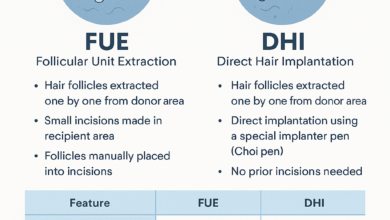
Is Stem Cell Hair Treatment the Same as FUE or DHI?
No.
This distinction is extremely important.
FUE Hair Transplant
In Follicular Unit Extraction, individual follicular units are removed from the donor area and implanted into areas affected by hair loss.
DHI Hair Transplant
DHI generally uses an implantation pen or similar device to place extracted grafts into the recipient area.
Stem Cell and Regenerative Treatments
Regenerative treatments typically aim to improve the function of existing follicles or stimulate biological processes associated with hair growth.
They do not currently replace conventional transplantation when a patient needs large numbers of new follicles transferred into a bald area.
In simple terms:
FUE and DHI move existing hair follicles.
Regenerative treatments attempt to improve or stimulate biological activity around existing follicles.
You can learn more about implantation techniques in our guide to DHI Hair Transplant in Turkey.
Can Stem Cells Create New Hair Follicles?
This is one of the most important questions.
Laboratory research is investigating whether stem cells, induced pluripotent stem cells and hair follicle organoids could eventually be used to generate transplantable follicles.
This is a promising research direction, particularly because one of the major limitations of conventional hair transplantation is the finite number of donor follicles available.
However, laboratory-generated hair follicles are not yet a routine replacement for conventional hair transplantation.
Research published in 2025 highlighted the potential of induced pluripotent stem cells and hair follicle organoids to address donor-hair limitations in the future, while also emphasizing that substantial technical and clinical challenges remain. Springer
Patients should therefore be cautious about commercial claims suggesting that current treatments can reliably create an unlimited supply of completely new follicles.
Who May Be a Candidate?
Potential candidates for regenerative hair treatments may include people with:
- Early-stage androgenetic alopecia
- Thinning rather than completely bald areas
- Miniaturized but still active follicles
- Progressive hair loss around existing transplanted hair
- A desire for supportive treatment alongside established therapies
The effectiveness of regenerative treatment may be lower in areas where follicles have been absent or severely miniaturized for a long time.
A medical evaluation is especially important when hair loss may be caused by conditions such as:
- Alopecia areata
- Scarring alopecia
- Thyroid disorders
- Nutritional deficiencies
- Autoimmune disease
- Medication-related hair loss
Different forms of alopecia have different causes and should not automatically be treated in the same way.
What Does the Current Evidence Show?
The scientific evidence is developing rapidly, but it is important to interpret it carefully.
A 2026 review of stem-cell-based approaches for alopecia described hair follicle stem cells, mesenchymal stem cells and induced pluripotent stem cells as promising areas of research. At the same time, much of the field remains focused on feasibility, mechanisms and early clinical application rather than standardized routine treatment. PubMed
A 2026 scoping review examining mesenchymal stem cells and extracellular-vesicle-based therapies also found potential benefits for hair-related applications but concluded that clinical utility remains uncertain and that evidence gaps remain. Springer
This means the current evidence can reasonably be described as promising but not definitive.
Stem Cells, Exosomes and PRP: Are They the Same?
No.
These terms are often grouped together in marketing, but they refer to different things.
Stem Cells
Stem cells are living cells capable of self-renewal and, depending on the cell type, differentiation into other cell types.
Exosomes and Extracellular Vesicles
Extracellular vesicles are small membrane-bound particles released by cells. They can carry proteins, lipids and genetic material involved in cell-to-cell signaling.
They are therefore considered a cell-free regenerative approach, rather than a treatment involving transplantation of living stem cells themselves. PubMed
PRP
Platelet-rich plasma is prepared from a patient’s own blood and contains concentrated platelets and growth factors.
PRP has been studied more extensively in hair loss than many newer regenerative therapies, although results still vary between patients.
These treatments should not be presented as identical.
How Long Does It Take to See Results?
There is no universally accepted timeline because regenerative protocols vary substantially.
Hair growth itself is slow, so visible changes generally require months rather than days or weeks.
Clinical studies may assess outcomes such as:
- Hair density
- Hair-shaft diameter
- Percentage of hairs in the growth phase
- Standardized photography
- Patient satisfaction
Patients should be cautious of advertisements promising dramatic results within extremely short periods.
Are the Results Permanent?
At present, there is not enough standardized long-term evidence to say that stem-cell-based hair treatments permanently stop progressive androgenetic alopecia.
Male and female pattern hair loss are chronic conditions.
Even when a treatment improves hair density, the biological processes causing progressive follicle miniaturization may continue.
For this reason, regenerative treatment may eventually form part of a broader hair-loss strategy rather than functioning as a one-time permanent cure.
Can Stem Cell Treatment Replace a Hair Transplant?
For most patients with established bald areas, conventional hair transplantation remains the more established method for physically restoring hair to areas where adequate follicles are no longer present.
Regenerative treatments may be more relevant for:
- Supporting thinning hair
- Improving the scalp environment
- Attempting to support miniaturized follicles
- Complementing established treatments
- Potentially supporting recovery around a transplant
They should not currently be considered an automatic replacement for FUE or DHI.
If you want to see examples of conventional procedures, visit our Real Hair Transplant Results in Turkey section.
Risks and Limitations
The risks depend heavily on what is actually being injected or applied.
Potential concerns may include:
- Pain or swelling at injection sites
- Infection
- Inflammation
- Temporary scalp sensitivity
- Uncertain product composition
- Differences in manufacturing quality
- Lack of standardized dosing
- Uncertain long-term effects for some emerging products
Another major issue is terminology.
Two clinics may both advertise “stem cell hair treatment” while using completely different biological products or techniques.
Patients should therefore ask exactly what material is being used and what evidence supports that specific product or protocol.
Stem Cell Hair Treatment Cost in Turkey
There is no single standard price because “stem cell hair treatment” can refer to several different procedures.
The cost may depend on:
- Type of biological product
- Number of sessions
- Processing method
- Whether the treatment is combined with FUE or DHI
- Clinic and physician
- Additional PRP or regenerative treatments
- Treatment area
Patients should compare the actual treatment protocol rather than comparing prices based only on the phrase “stem cell hair transplant.”
Stem Cell Hair Transplant vs Traditional Hair Transplant
| Feature | Stem Cell / Regenerative Treatment | FUE or DHI Hair Transplant |
|---|---|---|
| Main purpose | Support or stimulate follicular activity | Move follicles to bald/thinning areas |
| Donor grafts required | Not always | Yes |
| Creates immediate new graft placement | No | Yes |
| Evidence base | Emerging | Well established |
| Best suited for | Selected thinning areas / adjunct treatment | Established hair loss requiring redistribution |
| Standardization | Limited | Relatively established |
Frequently Asked Questions
Does stem cell treatment regrow hair?
Some early studies of regenerative therapies report improvements in hair density or related measurements, but results vary and current evidence does not support guaranteed regrowth.
Is stem cell treatment better than PRP?
There is not enough standardized comparative evidence to say that stem-cell-based treatments are universally better than PRP. The two approaches also use different biological mechanisms.
Are exosomes the same as stem cells?
No. Exosomes and other extracellular vesicles are signaling particles released by cells. They do not contain living stem cells.
Can stem cells replace FUE or DHI?
Not currently for most patients with established bald areas. Conventional hair transplantation remains the established method for transferring follicles into areas where hair is absent.
Can stem cell treatment create unlimited donor hair?
Not with currently established clinical treatments. Hair follicle generation from stem cells and organoid technologies remains an important research area rather than a routine clinical solution. Springer
How many sessions are required?
There is no universally standardized protocol. The number of sessions depends on the technique, product and treatment plan.
Final Thoughts
Stem-cell-based and regenerative hair treatments are among the most interesting emerging areas in hair-loss research.
The science is developing quickly, particularly around hair follicle stem cells, mesenchymal stem cells, extracellular vesicles and laboratory-generated follicular structures. However, the field has not yet reached the same level of standardization and long-term clinical evidence as established treatments such as conventional hair transplantation.
Patients considering these treatments should focus on three questions:
What exactly is being used?
What evidence supports that specific treatment?
What realistic outcome can be expected for my type of hair loss?
For patients with established bald areas, FUE or DHI may remain more appropriate. For patients with thinning or miniaturized follicles, regenerative approaches may have a future role as supportive treatments as stronger clinical evidence develops.